Skip to content


What Kind Of Drone Should I Buy For A Commercial Business?
- by Stefan Gandhi
The single most common mistake UK businesses make when buying a first drone is shopping for a licence that no longer exists. The Civil Aviation Authority withdrew the Permission for Commercial Operations at the end of 2020 and never replaced it, so the rules that govern your flying now depend on the aircraft's weight and class mark and on where you intend to fly. Being paid for the flight is no longer the deciding factor. That distinction changes which drone you should actually buy, and here is how the current framework maps onto a purchase decision.
There Is No Commercial Drone Licence In The UK
The CAA states this plainly in its guidance on flying drones for work. The PfCO was withdrawn when the UK moved to a new set of regulations at the end of 2020, and there is no direct replacement. The regulations now focus on the risks of the flight, based on the aircraft weight and characteristics and where you are flying.
Flights sit in one of three categories. The Open category covers most leisure activity and low-risk commercial work. The Specific category covers anything more complex and needs an Operational Authorisation. The Certified category handles the highest-risk operations and is not relevant to most businesses.
One requirement does still hinge on the work being paid, and that is insurance. It is covered further down.
How Weight And Class Marks Decide What You Can Do
Registration comes first. A Flyer ID is free, lasts five years, and has been required for anyone flying a drone over 100g since 1 January 2026. An Operator ID costs £12.34 a year, requires the holder to be 18 or over, must be labelled on the aircraft, and is needed by every organisation flying drones.
After that, the class mark on the box decides your working distances.
- UK0, under 250g including payload, flies in the A1 Over People subcategory
- UK1, under 900g including payload, also flies A1
- UK2, under 4kg including payload, flies A2 Near People with an A2 CofC, or A3
- UK3 and UK4, both under 25kg including payload, are A3 only
A1 lets you fly closer than 50m to uninvolved people and over them, though never over crowds. A2 with a UK2 aircraft brings you to 30m from uninvolved people, or 5m in low-speed mode. A3 keeps you 50m from uninvolved people and 150m from residential, recreational, commercial and industrial areas. Everything in the Open category stays below 120m.
This is where legacy stock bites. A drone with no UK or European mark is restricted by weight alone, so an unmarked aircraft under 2kg is stuck at 50m even if the pilot holds an A2 CofC. Buy the equivalent UK2 aircraft and the same pilot works at 30m. Same qualification, very different reach on site.
Two dates matter for anyone buying now. New models placed on the market from 1 January 2026 must carry a UK class mark, and European C-class drones may be flown as the equivalent UK class only until the end of 2027. Remote ID has been mandatory on UK1, UK2, UK3, UK5 and UK6 aircraft since 1 January 2026 and extends to everything else, legacy airframes included, from 1 January 2028.
The A2 CofC And RPC-L1 Route For Business Work
The A2 Certificate of Competency unlocks the A2 Near People subcategory, lasts five years, and is awarded by CAA-approved assessment entities rather than the CAA itself. It involves self-directed practical training and a theory test of at least 30 multiple-choice questions, and it keeps you inside the Open category.
For most commercial operators the more consequential qualification is the General VLOS Certificate or its successor. The GVC also lasts five years, but the CAA has confirmed it stops being issued on 31 December 2027. The replacement is the RPC-L1, and existing GVC holders are exempt from its theory test. If you are training a team from scratch in 2026, RPC-L1 is the sensible choice.
When You Need An Operational Authorisation
A3-only restrictions make most urban commercial work impossible in the Open category, which is what pushes businesses into the Specific category. The route in for most operators is PDRA01.
PDRA01 covers aircraft between 250g and 25kg and permits flying in residential, commercial, industrial and recreational areas within visual line of sight. Flights must stay 50m from uninvolved people, reduced to 30m for take-off and landing, with a 120m height ceiling. The pilot needs a valid RPC-L1 or GVC and the operator needs an operations manual. It costs £524 a year with no VAT, runs for 12 months, and the CAA aims to issue within 24 hours of application.
Anything beyond PDRA01, including flights beyond visual line of sight, dropping items, or flying near assemblies of people, needs a UK SORA-based authorisation. UK SORA replaced the older Operating Safety Case method on 23 April 2025.
Insurance Is The One Rule That Cares About Money
The CAA is explicit here. Fly a drone for any commercial reason and you must have third party insurance as a minimum, complying with Assimilated Regulation (EU) 785/2004. The Drone and Model Aircraft Code gives paid photography, video, surveys, delivery and estate work as worked examples. Recreational insurance is discretionary. Commercial insurance is not.
Matching The Drone To The Job
Four bands cover almost every business case.
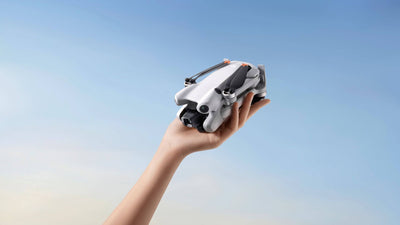
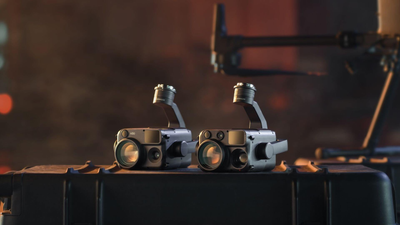
Under 250g suits estate agency, social content and quick site shots close to people with minimal paperwork. Under 900g in UK1 is the sweet spot for professional photography and light survey work, giving near-full A1 freedom on a heavier airframe with better sensors. UK2 up to 4kg plus an A2 CofC is the band for inspection and mapping that has to happen at 30m from people. Above that, sub-25kg aircraft assume the PDRA01 route anyway, so the airframe follows the payload rather than the category.
FAQs
Do I need a licence to fly a drone for my business in the UK?
There is no commercial drone licence in the UK. You need a Flyer ID and an Operator ID, and depending on the aircraft weight and how close you need to work to people, either an A2 CofC or an RPC-L1 plus an Operational Authorisation.
What replaced the PfCO?
Nothing directly. The CAA withdrew the Permission for Commercial Operations at the end of 2020 and moved to a risk-based system built on the Open, Specific and Certified categories.
What is the difference between the A2 CofC and the GVC?
The A2 CofC keeps you in the Open category and lets you fly closer to uninvolved people. The GVC, and its successor the RPC-L1, is what you need to hold a PDRA01 Operational Authorisation and work in built-up areas in the Specific category.
Do I need insurance to fly a drone commercially in the UK?
Yes. The CAA requires third party liability insurance as a minimum for any commercial flying, meeting the standard set out in Assimilated Regulation (EU) 785/2004.
Should I buy a drone with a UK class mark or a legacy model?
Buy the class mark. Legacy aircraft are limited by weight alone and lose A1 and A2 privileges, new models on the market must carry a UK mark from 1 January 2026, and legacy airframes need Remote ID by 1 January 2028.
Final Thoughts
Buy the category you need to work in, not the specification sheet you like the look of. Sit down with the jobs you actually expect to win, work out how close to people and buildings those jobs put you, then pick the class mark that unlocks that distance and train the pilot to match. Getting that order right saves buying twice.
Browse the range of commercial drones at the Coptrz official online store to find the class mark and payload combination that fits the work your business takes on.