Skip to content


How One Pilot Started A Drone Business And Won A Client In A Week
- by Stefan Gandhi
A post on the r/drones subreddit has struck a nerve with anyone sitting on a drone qualification they never turned into work. The pilot set a modest goal of landing one client by the end of summer, started looking properly at the beginning of a week, and had a signed recurring contract by the end of it. This article breaks down what actually worked, what the kit list looked like, and the practical advice the comment thread threw up.
The Short Version Of The Story
The pilot had held a Part 107 certificate for around three years, paid for by an employer, and had hoped it would lead to a drone role internally. It never did. Disappointment turned into a long stretch of not flying at all.
What restarted things was personal rather than commercial. Flying to capture photos and video at a family gathering reminded him he enjoyed it. At the end of June he decided to build a small business around mapping and construction site documentation, partly because it overlapped with his existing job.
The practice phase came first. He spent several weeks mapping and photographing his own house and his parents' house, purely to get comfortable producing orthomosaics. That is unglamorous work and it is also the reason the first paid job went smoothly.
The Cold Approach That Landed The Client
The route to the first client was almost accidental. He passed a live construction site on the way to a friend's house, stopped, and found contact details on the planning permit displayed on the hoarding.
The first cold email got no reply. The follow up a few days later got an almost immediate response from the developer. They got on, and the developer hired him to document the project on a recurring basis plus a handful of one off shoots at other properties.
Two details are worth pulling out. The permit board was the lead source, which is public information sitting in plain sight outside every site in the country. And the follow up email was what converted, not the first one. A single unanswered approach is not a rejection.
The Kit Behind A Lean Start
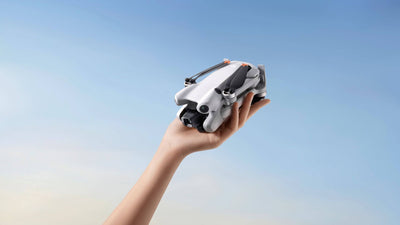
The setup is deliberately modest. He is flying a DJI Mini 5 Pro Fly More Combo with an additional larger battery, using Waypoints for automated flight lines and WebODM for processing. The service on offer is a basic mapping package covering photo and video documentation of the site, an orthomosaic, and extra shots aimed at social media or investor updates.
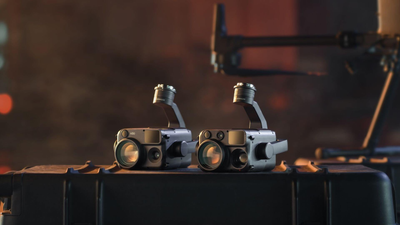
That combination of deliverables is smarter than it looks. The ortho serves the site manager, the polished aerial stills serve the developer's marketing, and both come off the same flight. Thermal and LiDAR are on his list, but explicitly parked until the core business proves itself.
Sub 250g aircraft carry a genuine advantage for this kind of work too. In the UK a drone in that weight class faces fewer restrictions when flying near people in the Open Over People subcategory, which matters on a site with contractors moving around. A camera still triggers the Operator ID requirement at 100g and above, so registration remains non negotiable.
What The Comment Thread Added
The replies were a mix of encouragement and hard practicality, and a few themes came up repeatedly.
- Pricing. One commenter with commercial development experience suggested that established work in that sector runs to £2,000 or more per shoot, well above where a beginner starts. The original poster was upfront that current earnings are modest and the plan is a slow build towards full time work later.
- Delivery. Several people pressed on how files reach the client. He is currently using a shared Google Drive folder, with a private client portal on a website as the next step. Another commenter described exactly the portal he wants to build, organised by client and then by flight date.
- Ground control. A surveyor raised the obvious limitation, which is that the Mini 5 Pro has no RTK, so absolute accuracy depends on ground control points. For progress documentation that is often acceptable. For volumetrics or anything with survey tolerances attached, it is not.
- Platforms. Propeller Aero and DroneDeploy both came up as construction focused processing and reporting platforms worth adopting once budget allows.
The consistent thread underneath all of it was that the technical questions were easier than the business ones. Nobody in the comments doubted he could fly. The doubts were about pricing, deliverables and how to keep a client past the first invoice.
What UK Pilots Should Take From It
The regulatory route here is different but the sequence is the same. Get your Flyer ID and Operator ID sorted, add public liability insurance before the first paid job, and decide early if you are selling documentation or survey grade data, because the second one changes your kit list and your pricing.
Then look for the equivalent of that permit board. Planning application notices, local authority planning portals and site hoardings all publish named contacts for live projects in your area. It is a slower list than buying leads and the conversion rate is considerably better.
FAQs
How to start a drone business in the UK?
Register with the CAA for a Flyer ID and an Operator ID, arrange public liability insurance, and obtain an Operational Authorisation if your intended work falls outside the Open category. Then pick one service, such as construction progress documentation, and practise it until your outputs are consistent before approaching clients.
How much does it cost to start a drone business?
A lean start is cheaper than most people assume. A sub 250g camera drone with spare batteries, free or low cost processing software, CAA registration and an insurance policy will get you operating, with training and survey grade hardware added later once revenue justifies them.
Is a drone business profitable?
It can be, but rarely straight away. Early jobs tend to cover kit and running costs rather than replace a salary, and profitability usually arrives with recurring contracts rather than one off shoots, which is exactly what happened in this case.
Do I need a licence to own a drone?
No licence is needed to own one. Flying is what triggers the requirements: a Flyer ID for any drone at 100g or above, and an Operator ID if it weighs 250g or above or weighs 100g or above and has a camera.
Final Thoughts
The most useful part of this story is not that a client appeared in week one. It is what happened in the weeks before, when nobody was watching and the pilot was mapping his parents' house until he could produce a clean orthomosaic on demand. The cold email worked because there was something behind it. Practice first, pick one service, follow up when the first message goes unanswered, and keep the kit lean until the work justifies more.
Starting your own mapping and documentation work? The DJI Mini 5 Pro is available now alongside spare batteries and accessories at the Coptrz official online store.
Image courtesy of Groundpoint on Reddit.