Skip to content


When Is The Best Time To Buy A Drone?
- by Stefan Gandhi
Most advice about timing a drone purchase fixates on sale periods and product launch cycles. In the UK there is a bigger variable in play, because the CAA is midway through the largest set of rule changes the sector has seen, and the dates attached to those changes affect what a drone bought today will still be allowed to do in two years. This article covers the regulatory timeline, the practical buying windows, and how to line the two up.
The Regulatory Calendar Now Matters More Than The Sale Calendar
From 1 January 2026, drones intended for use in the Open category in the UK became subject to a set of domestic product standards. That is the UK class marking regime, running from UK0 through to UK6, and it covers performance and reliability, geo awareness, Remote ID and flashing lights, along with labelling requirements and manufacturer compliance procedures. A new Market Surveillance Authority oversees it.
The same date brought the end of a long transition. Following a Department for Transport consultation, non class marked drones were allowed to continue in the Open category until 1 January 2026, which means a drone bought before the standards took effect sits in a different regulatory bucket to one bought after.
The CAA has confirmed a wider package of updates alongside this. The Open category subcategories have been renamed to Over people (A1), Near people (A2) and Far from people (A3). A 100g threshold has replaced the old toy exemption. Free online Flyer ID training has been extended to everyone flying a drone over 100g. And class marking now brings product standards in at the point of manufacture.
The Remote ID Dates Worth Writing Down
Direct Remote ID is the requirement that catches most buyers by surprise, because it applies on two separate dates.
From 1 January 2026, UK1, UK2, UK3, UK5 and UK6 class drones require Direct Remote ID. From 1 January 2028, after a two year transition, the requirement extends to UK0 drones with a camera at 100g or above, model aircraft in class UK4 unless exempted, privately built drones with a camera at 100g or above, and legacy drones with a camera at 100g or above.
That 2028 date is the one to hold in mind if you are considering an older model or a second hand bargain. A legacy camera drone bought cheaply in 2026 has a defined shelf life in its current form unless the manufacturer ships a firmware update that adds Direct Remote ID. Before buying anything older, check if the manufacturer has committed to that update.
What The March 2026 Drone Code Changes Mean In Practice
The Drone Code was updated in March 2026. The presentation of the Over people (A1) rules changed, and the distance requirements for Far from people (A3) operations were refined, requiring at least 150m separation from residential, recreational, commercial and industrial areas with separate minimums for individual structures.
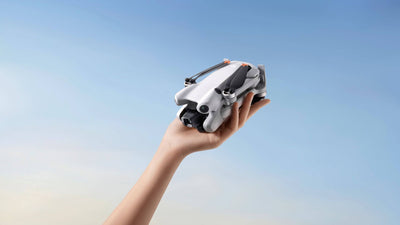
For a buyer, this is the point where weight class stops being an abstraction. A heavier drone that can only be flown in A3 needs a genuinely open site 150m clear of anything built up, which is harder to find in most of the UK than people expect. A sub 250g class marked drone opens up A1 flying near people, and that difference dictates where you can realistically fly far more than any specification on the box.
The CAA has confirmed that most existing operators can carry on flying their current aircraft in their current subcategories, so nobody needs to panic buy. The point is to know which bucket the drone you are about to purchase falls into.
The Ordinary Buying Windows Still Apply
Regulation aside, the commercial patterns are real. Drone prices tend to soften in three situations: when a successor model is announced and the outgoing model is cleared, during the November discount period running up to Black Friday, and in the post Christmas January window when retailers reset stock.
Manufacturer launch cadence is fairly predictable, with new consumer models typically arriving in spring and autumn. Buying the outgoing generation a few weeks after a successor is announced usually gets you the largest discount of the year on a drone that is still fully supported.
Seasonality cuts the other way for flying. Buying in autumn or winter means shorter days, colder batteries and more washed out flights while you are learning. Buying in late spring gives you a full season of usable weather to build hours in before the light goes, which for a first drone is worth more than a modest saving.
How To Time It Sensibly
Put the three factors in order. Confirm the class marking and Remote ID status of the specific model first, because that determines what the drone can legally do for the rest of its life. Then look at where it sits in the product cycle. Then look at the calendar.
If you want the best price and you are comfortable with a model that is one generation behind, wait for a successor announcement and buy the outgoing version, provided it is class marked and Remote ID ready. If you want the longest useful life, buy a current class marked model and stop worrying about the 2028 date entirely.
FAQs
Do DJI drones ever go on sale?
Yes. Discounts are most common around the November sales period, in January, and when a successor model is announced and retailers clear the outgoing generation. Flagship models are discounted less aggressively and less often than mid range ones.
How much should you pay for a good drone?
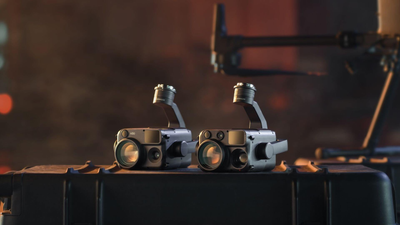
That depends entirely on the job. A capable sub 250g camera drone suitable for travel and general photography sits at the lower end of the range, while survey and inspection work with interchangeable payloads costs several times more. Set the requirement first, then the budget.
Do I need a licence to fly a drone under 100g in the UK?
No Flyer ID or Operator ID is legally required below 100g, although the CAA still recommends taking the free online test. At 100g and above a Flyer ID becomes mandatory, and an Operator ID is required at 250g and above or at 100g and above with a camera.
Is it worth buying a DJI drone now?
For most buyers yes, provided you check the class marking and Remote ID status of the specific model rather than the brand. A current class marked aircraft with Direct Remote ID sits comfortably within the rules through the 2028 deadline and beyond.
Final Thoughts
The best time to buy a drone in the UK is when a current class marked model with Direct Remote ID lines up with a discount, ideally in late spring so you get a full flying season out of it. Deals come round every year. Rule deadlines do not, and the difference between a drone that stays fully usable past January 2028 and one that does not is a check you can do in a minute before you spend anything.
Comparing your options before you commit? See the full range of consumer, commercial and enterprise drones at the Coptrz official online store.