Skip to content


Matrice 5TD vs Matrice 4D Series: Is DJI's New Dock Drone Worth It?
- by Megan Wood
Already flying a Matrice 4D series drone from a DJI Dock 3, or planning a new automated drone programme? Here’s how the new Matrice 5TD compares with both the Matrice 4D and 4TD, and which upgrades actually matter for your operations.
One dock drone instead of two
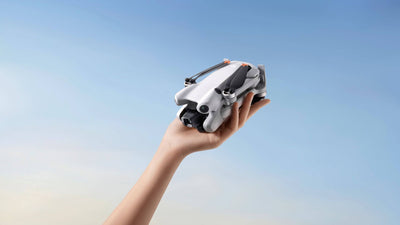
The Matrice 4D series comes in two versions. Both share the same airframe, battery and flight performance, but they carry different cameras for different jobs.
The Matrice 4D is the mapping and visual inspection option. Its wide camera uses a large 4/3 CMOS 20 MP sensor with a mechanical shutter, an adjustable f/2.8 to f/11 aperture and RAW (DNG) capture. That makes it well suited to photogrammetry, construction progress monitoring and stockpile surveys. It has no thermal camera.
The Matrice 4TD swaps that wide camera for a 1/1.3-inch 48 MP sensor with a brighter f/1.7 aperture. It adds a 640 x 512 thermal camera and a near-infrared (NIR) auxiliary light, so it’s the version most security, emergency response and thermal inspection teams choose.
With the Matrice 5TD, DJI has moved to a single aircraft. There’s no separate D version, so every Dock 4 deployment gets thermal imaging as standard. Below, we compare the 5TD with both 4D series versions.
More endurance where it counts
The Matrice 4D and 4TD are identical in size and flight performance. Each weighs 1,850 g, has a 498.5 mm wheelbase and carries a 149.9 Wh battery. That gives a maximum flight time of 54 minutes and a maximum hover time of 47 minutes.
The Matrice 5TD, built for the DJI Dock 4, is a bigger aircraft. It weighs 2,600 g, has a 549 mm wheelbase and carries a 260 Wh battery, around 70% more energy than either 4D series drone. That lifts maximum flight time from 54 to 59 minutes, but the bigger gain is hover time, 55 minutes against 47. For inspection and site monitoring, where the drone holds position over an asset, those extra eight minutes are real working time. As always, these are maximums under ideal conditions.
Some things stay the same across all three. Each has a 10 km operating radius, 12 m/s wind resistance and an IP55 rating (protection against dust and water jets).
Built for colder sites
The Matrice 4D and 4TD both operate from -20°C to 50°C. Their batteries charge between 5°C and 45°C and self-heat in low temperatures.
The 5TD operates down to -40°C, and its battery charges across a 10°C to 55°C range, giving more headroom in hot conditions. Few UK sites get as cold as -40°C, but the extra margin helps on exposed upland and coastal infrastructure through winter.
How the cameras compare
The camera differences depend on which 4D series version you’re coming from.
- Wide camera: The 4D has a 4/3 20 MP sensor with a mechanical shutter, the 4TD has a 1/1.3-inch 48 MP sensor, and the 5TD has a 1/0.98-inch 50 MP sensor. The 5TD’s sensor is a clear step up from the 4TD’s for low-light detail. The 4D’s sensor, however, is physically larger, and its mechanical shutter avoids the distortion that can affect mapping accuracy.
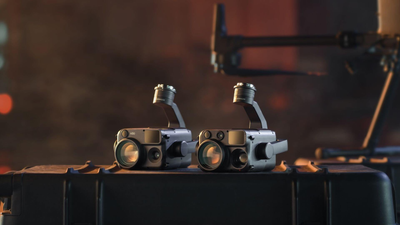
- Tele camera: Both 4D series drones use a 168 mm tele camera with hybrid zoom up to 112x. The 5TD extends this to 252 mm with hybrid zoom up to 176x.
- Thermal camera: The 4D has none. The 4TD records at 640 x 512, with a 1280 x 1024 high-resolution mode. The 5TD records at 1280 x 1024 natively, four times the pixels of the 4TD, with a 2560 x 2048 super-resolution mode.
- Laser rangefinder: Both 4D series drones measure distances up to 1.8 km. The 5TD reaches 3 km.
For solar farms, substations and pipelines, higher thermal resolution means spotting smaller hot spots from further away, so you cover more ground per flight. For survey and mapping work where thermal isn’t needed, the Matrice 4D’s wide camera remains a strong choice.
Smarter obstacle sensing
The Matrice 4D and 4TD both rely on omnidirectional binocular vision, supported by a 3D infrared sensor underneath the aircraft. The 5TD adds colour vision, LiDAR and millimetre-wave (mmWave) radar, which uses radio waves rather than light to detect obstacles. Layering different sensor types gives more dependable coverage in rain, fog and low light, when cameras alone struggle.
Matrice 5TD vs Matrice 4D series, which should you choose?
The right choice depends on the work your dock will do day to day.
- Matrice 4D on Dock 3: Best for routine mapping, construction progress tracking and visual inspection where thermal isn’t required. Its mechanical shutter wide camera is built for accurate survey data.
- Matrice 4TD on Dock 3: A proven, capable setup for security patrols, night operations and routine thermal checks, at a lower entry point than the new generation.
- Matrice 5TD on Dock 4: The pick if you need longer hover times, finer thermal detail, more reach from the rangefinder or operations in extreme cold.
The Coptrz team can help you match the right dock and drone to your sites and get your programme running.
FAQs
What is the main difference between the Matrice 5TD and Matrice 4TD?
The 5TD has longer hover time, a higher-resolution thermal camera, a longer-range laser rangefinder and added LiDAR and mmWave sensing.
What is the difference between the Matrice 4D and Matrice 4TD?
They share the same airframe and flight performance. The 4D has a 4/3 mechanical shutter wide camera for mapping, while the 4TD adds a thermal camera and NIR auxiliary light.
Is the Matrice 4D still a good choice now the 5TD is available?
Yes, if your work is mainly mapping or visual inspection. The 5TD only comes with thermal, so the 4D remains the dedicated non-thermal dock option.
Which dock does each drone use?
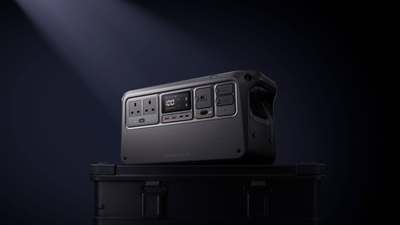
The Matrice 5TD is designed for the DJI Dock 4, and the Matrice 4D and 4TD for the DJI Dock 3.
Can the Matrice 5TD fly in freezing conditions?
Yes. It’s rated to operate from -40°C to 50°C, compared with -20°C to 50°C for the Matrice 4D and 4TD.
Final thoughts
Ready to step up your automated operations? Learn more about the DJI Dock 4 with Matrice 5TD at Coptrz.