Skip to content


How To Start A Drone As First Responder Programme In 5 Stages
- by Stefan Gandhi
Most drone as first responder programmes stall for the same reason, which is that the team treats the docks as a purchase rather than a sequence of things to prove. DJI published a practical roadmap on 24 August 2026 that breaks a DFR rollout into five stages, each one building the foundation for the next. Here is the sequence, the six roles that keep it running, and what UK teams should prepare early.
Why The Order Matters More Than The Kit
The core idea in the roadmap is blunt. What matters first is what to prove, and in what order. A programme that jumps straight to a regional network of docks without validating a single site tends to collect problems faster than it collects flight hours.
Working in stages also protects the business case. Each stage produces evidence that justifies the next round of spending, which is far easier to defend to a finance team than a single large capital request supported by a demo.
Stage 1 Prove The Capability
Start with one or two docks at a single location. The goal is narrow and technical, which is to confirm that automated launch, landing and recharge work reliably, and that live video reaches the operator's screen without drama.
This stage is also where you document the limits honestly. Weather thresholds, airspace restrictions and local obstructions all show up quickly at a single site, and knowing them early is worth more than an optimistic proof of concept.
Stage 2 Integrate The Systems
A working dock that lives on its own screen is a demonstration, not a capability. Stage two connects drone operations into the existing dispatch workflow, pushes the video feed into the command centre platform the team already watches, and puts drone position and data on the organisational map.
The measure of success here is simple. When an incident comes in, nobody should have to turn to a separate laptop to see what the drone is doing.
Stage 3 Clear Security And Compliance
DJI describes this as usually the longest and most demanding part, and that matches what UK teams report. It covers IT security review, flight approvals under local regulation, and a documented approach to how footage and data are handled, stored and released.
Beyond visual line of sight permission belongs here too. BVLOS is what makes automated response genuinely scalable, and it is a regulatory requirement to satisfy locally rather than an assumption to build a plan around. In the UK that means engaging with the CAA process early, not once the docks are installed.
Stage 4 Move To Service Operations
Stage four turns a project into a service. That means a remote operations centre and a staffing model capable of keeping drones available around the clock, rather than during whichever hours the project team happens to be working.
The shift is as much cultural as operational. Once other teams start relying on aerial arrival before ground units, the programme has to be resourced like any other continuous service.
Stage 5 Connect The Network
The final stage links multiple sites under one command structure. Centralised oversight of geographically distributed docks lets coverage grow without staffing growing at the same rate, which is where the economics of a DFR programme finally work in your favour.
The Six Roles Behind A Docked Programme
The roadmap sets out six roles, and they are worth reading as a staffing plan:
- Programme manager owns drone readiness across the lifecycle, configures docks, coverage areas and no fly zones, and verifies that post mission records are complete.
- Dock pilot supervises automated flights, watches battery status and system alerts, adjusts the camera on request and stays ready to take manual control. The emphasis is oversight and judgement, not routine stick time.
- Command centre watches the aerial feed, tracks position on the map and assesses incident severity before ground units arrive.
- Dispatch decides when a drone launch is appropriate and uses drone position to route ground units.
- Ground response receives live video and position data en route, so crews arrive briefed rather than blind.
- Evidence and archiving governs package completeness, chain of custody and retention, largely automated but under human governance.
The governing principle is that automation handles the routine and people handle the judgement.
What Docked Automation Does Not Replace
Docked drones do not retire pilot flown operations. Tactical overwatch, indoor searches, fast moving dynamic scenes and any situation with a trained pilot already on site still call for a crewed deployment. A mature programme runs both, and decides which tool fits each call.
FAQs
What does DFR stand for in policing?
DFR stands for drone as first responder. It describes a model where a drone is dispatched to an incident automatically or semi automatically, arriving before ground units so that responders have live aerial information on the way. Docked systems such as DJI Dock 3 have made the model practical at scale.
Do you need BVLOS approval for a DFR programme?
In most cases yes, because the value of an automated dock depends on reaching incidents beyond the operator's line of sight. Requirements vary by country and region, and in the UK that means working through the CAA authorisation process. Treat it as a stage three task rather than an assumption.
How long does it take to set up a DFR programme?
Stage one can be completed in weeks with a single site and a light survey. The security, compliance and flight approval stage is usually the longest, and it is the phase most likely to set the overall timeline. Teams that start regulatory engagement in parallel with the first trial tend to move fastest.
Does a DFR programme replace piloted drone teams?
No. Docked automation covers routine and repeatable response, while piloted operations remain the right answer for tactical overwatch, indoor work and dynamic incidents. Most mature programmes run both models side by side.
What equipment do you need for a drone as first responder programme?
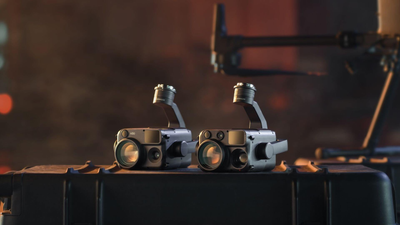
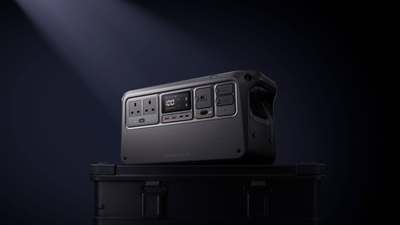
At minimum you need a weatherproof dock, a compatible aircraft such as the Matrice 4D or Matrice 4TD, a fleet management platform like DJI FlightHub 2, and reliable power and network at the site. Integration with your existing dispatch and evidence systems is just as important as the hardware.
Final Thoughts
A DFR programme succeeds on sequence rather than on specification. Prove the capability at one site, integrate it into the systems your team already uses, clear security and flight approvals properly, resource it as a service, and only then connect sites into a network. The six role staffing model gives that plan a shape, and the split between automation and judgement keeps accountability where it belongs.
Coptrz works with UK public safety teams on DFR programmes from first site survey through to multi site rollout, so contact the sales team at sales@coptrz.com or call 0330 111 7177 to scope yours. You can also browse compatible enterprise aircraft and payloads at the Coptrz official online store.