Skip to content


How The Czech Search And Rescue Team Uses The DJI Zenmuse H30T To Find Missing Persons
- by Stefan Gandhi
Search and rescue operations are defined by urgency, uncertainty, and challenging environments. When a person goes missing, especially in remote or difficult terrain, the ability to gather accurate information quickly can mean the difference between success and failure. Across Europe, professional and volunteer rescue teams are increasingly turning to enterprise drone technology to improve speed, visibility, and coordination in the field.
This case study explores how the Czech Search and Rescue team uses the DJI Zenmuse H30T thermal payload, mounted on a DJI Matrice 350 platform, to locate missing persons efficiently across forests, mountains, meadows, and wide open areas. The workflow shown in DJI Enterprise’s video demonstrates how thermal imaging, long-range optical zoom, and real-time data sharing support faster decision-making and more effective deployment of ground teams.
For UK public safety organisations, emergency responders, and professional drone operators, this real-world example highlights how modern enterprise payloads are reshaping search and rescue operations.
The Czech Search & Rescue Team
The Czech Search and Rescue team is a volunteer organisation made up of trained rescue professionals whose primary focus is locating missing persons. Their operations frequently take place in environments that are difficult to access on foot, including dense woodland, mountainous regions, rural meadows, and expansive open terrain.
Before any mission begins, the team gathers as much intelligence as possible. This includes last known locations, terrain characteristics, weather conditions, time of disappearance, and any other factors that could influence the search strategy. This preparation phase is critical, as it determines how resources are allocated and which areas are prioritised.
In these scenarios, time is always a limiting factor. Ground searches alone can be slow, physically demanding, and resource intensive. This is where enterprise drone technology plays a decisive role.
Why Thermal Imaging Is Critical In Search & Rescue
One of the greatest challenges in locating missing persons is visibility. Poor light, dense vegetation, uneven terrain, and adverse weather conditions can significantly limit what ground teams are able to see. Thermal imaging overcomes many of these limitations by detecting infrared radiation emitted by warm objects, including the human body.
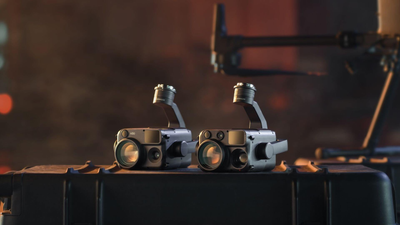
The DJI Zenmuse H30T includes a high-performance thermal camera designed for professional applications. In search and rescue missions, this allows operators to detect heat signatures that would otherwise be invisible, particularly during night operations or in poor-visibility conditions such as fog or heavy cloud cover.
Thermal imaging does not rely on reflected light, which makes it highly effective after sunset or under tree canopies. This capability extends the operational window for search teams and increases the likelihood of early detection.
The DJI Zenmuse H30T & Matrice 350 In Live Operations
During search operations, the Czech Search and Rescue team deploys a DJI Matrice 350 RTK equipped with the Zenmuse H30T payload. This combination provides the endurance, stability, and sensor capability required for complex missions.
The H30T integrates thermal imaging with a powerful optical zoom camera, allowing operators to scan large areas quickly and then zoom in on points of interest without repositioning the aircraft. This dual-sensor approach supports both wide-area coverage and detailed inspection within a single flight.
The drone is typically deployed in areas where there is a high probability that the missing person may be located. The operator monitors the live camera feed in real time, actively scanning for anomalies such as unexpected heat signatures, movement, or visual clues that stand out from the surrounding environment.
Detecting Anomalies & Guiding Ground Teams
Once a potential point of interest is identified, speed and accuracy become essential. When the drone operator detects anything suspicious, the information is immediately relayed to the nearest ground team. This could be a clear heat signature, a visual trace, or something unusual that requires closer inspection.
The drone operator guides ground personnel directly to the location of the finding, using precise positioning from the aerial perspective. This reduces uncertainty and prevents teams from searching the wrong area or duplicating effort.
After the ground team inspects the location, the drone can be redeployed to continue searching another sector. This rolling workflow ensures continuous coverage and maximises the effectiveness of both aerial and ground resources.
Real-Time Coordination With FlightHub 2
A key element of the Czech team’s workflow is the use of DJI FlightHub 2. The drone is connected to the platform, allowing the live camera feed to be shared with ground teams on tablets or mobile devices.
This shared situational awareness means that everyone involved in the operation sees exactly what the drone operator sees. Ground teams can orient themselves more easily, understand terrain features before arrival, and make informed decisions based on live aerial data.
For search and rescue operations, this level of coordination reduces confusion, improves safety, and speeds up response times. It also supports clearer communication between teams operating across large or fragmented search areas.
Covering Large Areas Efficiently
One of the most significant advantages of enterprise drones in search and rescue is the ability to cover large areas in a short amount of time. On foot, teams may take hours to search terrain that a drone can scan in minutes.
The Czech Search and Rescue team aims to deploy drones whenever possible because of this efficiency gain. By rapidly scanning priority areas from the air, they can identify where human intervention is required and where it is not. This allows limited personnel to be deployed more strategically and reduces physical strain on volunteers.
In time-critical situations, this efficiency directly translates into better outcomes.
Lessons For UK Search & Rescue Teams
For UK-based organisations, this case study offers clear insights into how enterprise drone payloads like the Zenmuse H30T can be integrated into operational workflows. Thermal imaging, optical zoom, and live data sharing are no longer experimental tools. They are proven assets in real search missions.
Police forces, fire and rescue services, mountain rescue teams, and other emergency responders face many of the same challenges as their Czech counterparts. Difficult terrain, limited visibility, and the need for rapid coordination are common across the UK landscape.
Adopting enterprise-grade platforms and payloads enables teams to respond faster, work more safely, and make better-informed decisions under pressure.
FAQs
How does thermal imaging help find missing persons?
Thermal imaging detects heat emitted by the human body, making it possible to identify people in low light, at night, or in dense vegetation where visual cameras struggle.
What is the DJI Zenmuse H30T used for?
The Zenmuse H30T is a multi-sensor enterprise payload used for public safety, search and rescue, inspection, and surveillance. It combines thermal imaging with long-range optical zoom for professional operations.
Which drone platforms support the Zenmuse H30T?
The Zenmuse H30T is compatible with DJI enterprise platforms such as the Matrice 350 RTK, providing extended flight time, stability, and operational reliability.
Can thermal drones be used at night in the UK?
Yes. Thermal payloads do not rely on visible light, making them highly effective for night operations, subject to UK aviation regulations and operational approvals.
How do drones improve coordination in search and rescue?
Drones provide an aerial overview, real-time video feeds, and precise location data. When combined with platforms like FlightHub 2, they allow teams to share live information and coordinate more effectively in the field.
Conclusion
The Czech Search and Rescue team’s use of the DJI Zenmuse H30T demonstrates how enterprise drone technology is transforming the way missing persons searches are conducted. By combining thermal imaging, optical zoom, and real-time coordination tools, teams can search larger areas faster while improving accuracy and safety.
For professional drone operators and public safety organisations in the UK, this case study highlights the practical value of investing in enterprise-grade payloads and platforms. When every second matters, having the right technology in the air can make all the difference.
To explore DJI Enterprise drones, thermal payloads, and professional search and rescue solutions, visit the Coptrz official online store, the UK’s trusted supplier of enterprise drone technology and expert support. For tailored advice or to enquire now, contact our specialist team at sales@coptrz.com.