Skip to content


Antigravity A1 Vs DJI Avata 2: How They Compare And Which To Buy
- by Stefan Gandhi
Choosing between the Antigravity A1 and DJI Avata 2 highlights how far consumer drones have evolved in recent years. Both models target pilots who want immersive flight and creative video capture, yet they approach the problem from very different angles. One prioritises total scene capture and post-production freedom, while the other focuses on controlled FPV flight and stabilised cinematic footage.
This comparison breaks down how the Antigravity A1 and DJI Avata 2 differ across camera systems, flight experience, performance, safety, and UK regulatory positioning, helping you decide which drone fits your style of flying and content creation.
Design Philosophy & Core Concept
The most important difference between these drones lies in how they are designed to capture video.
The Antigravity A1 is built around true 360 degree capture. Instead of pointing a camera in a fixed direction during flight, it records the entire scene using dual ultra-wide lenses. This allows creators to reframe shots after landing, extract multiple angles from a single flight, and track subjects without precise piloting.
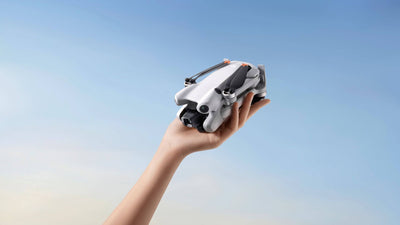
DJI Avata 2 follows a more traditional FPV cinewhoop approach. Its single forward-facing camera is mounted on a mechanical gimbal and paired with electronic stabilisation. The enclosed ducted frame makes it safer for close-proximity flying, particularly indoors or near obstacles, while still delivering an immersive FPV experience.
For creators who value flexibility after the flight, the Antigravity A1 introduces a fundamentally different workflow that reduces the pressure to get framing perfect in the air.
Camera Capabilities & Creative Output
Camera performance is where these drones diverge most clearly.
The Antigravity A1 captures full spherical video at up to 8K resolution. This means everything around the drone is recorded at once, enabling creators to choose forward, rear, side, or top-down views during editing. High-resolution 360 still images further support panoramas, social content, and immersive formats.
This approach suits creators who produce travel videos, action footage, or short-form social clips where flexibility and speed matter. A single flight can generate multiple pieces of content without repeating the same route.
DJI Avata 2 uses a 1/1.3-inch sensor with a 155 degree field of view, capturing high-frame-rate 4K video with strong colour profiles and stabilisation. The footage is clean, punchy and ready to use straight from the camera. RockSteady and HorizonSteady help smooth aggressive movements, while the mechanical gimbal provides controlled tilt adjustments.
Avata 2 excels when the goal is a specific shot captured precisely during flight. The Antigravity A1 excels when the goal is creative freedom after landing.
FPV Experience & Flight Control
Both drones offer immersive FPV flying, but the experience feels different.
The Antigravity A1 places strong emphasis on intuitive control. Motion-based point-to-fly input allows pilots to direct the drone naturally, while head tracking inside the goggles lets users look around the live 360 scene in real time. Traditional stick controls are also supported, but the overall design encourages exploration rather than technical manoeuvres.
This makes the A1 approachable for pilots who want immersion without committing to advanced FPV skills. It also supports creative exploration in unfamiliar locations where constant awareness of surroundings is valuable.
DJI Avata 2 provides a more structured FPV experience. Its ducted frame, visual positioning sensors, and Turtle Mode add confidence during low-altitude or indoor flights. Manual control options allow experienced pilots to push performance further, while assisted modes help newer users progress safely.
For pilots who enjoy the feeling of piloting a physical aircraft through space, Avata 2 delivers a more traditional FPV sensation.
Flight Performance & Endurance
Flight time can influence how often batteries need swapping and how much content can be captured per session.
The Antigravity A1 offers around 24 minutes of flight time with the standard battery and up to approximately 39 minutes with the high-capacity option. This extended endurance supports longer exploration flights and reduces interruptions when capturing travel or landscape footage.
DJI Avata 2 delivers up to 23 minutes of flight time under ideal conditions. While slightly shorter, it remains competitive for FPV drones, especially given the added weight of its enclosed frame and stabilisation systems.
For pilots prioritising longer single flights, the A1 holds a practical advantage.
Safety Systems & Flight Confidence
Safety plays a major role in consumer drone design, particularly for FPV models.
DJI Avata 2 benefits from its integrated propeller guards and downward and backward visual positioning sensors. These features help stabilise the drone during hover, assist with indoor flight, and reduce the risk of damage during minor collisions. Turtle Mode allows the drone to flip upright after a crash, which is useful during learning or tight manoeuvres.
The Antigravity A1 uses intelligent obstacle sensing, GNSS-assisted navigation, and payload detection to support safer flight. Retractable landing gear protects the bottom camera lens during take-off and landing, an important consideration for a 360 camera system.
While Avata 2 feels more physically protected, the A1 compensates with situational awareness gained through full-scene capture and intelligent flight assistance.
Storage & Workflow Efficiency
Workflow efficiency often determines how quickly content moves from flight to publish.
The Antigravity A1 records 360 footage that can be reframed using dedicated editing software and mobile apps. This enables creators to extract multiple clips from a single flight, saving time and reducing the need for repeated takes.
DJI Avata 2 includes 46 GB of internal storage and supports microSD cards. Footage is ready to use immediately, particularly for pilots who prefer minimal post-production and a straightforward editing process.
Creators working across multiple platforms may find the A1 workflow more versatile, especially for social and immersive formats.
UK Regulatory Considerations
Regulatory compliance is essential for UK pilots. Since January 2026, both a Flyer ID and Operator ID are required for drones fitted with a camera as they weigh over 100 g.
The Antigravity A1 operates below 250 g with its standard battery, placing it within the Open Category with fewer operational restrictions. When fitted with the high-capacity battery, it exceeds 250 g and carries a C1 class marking, requiring compliance with Open Category C1 rules.
The DJI Avata 2 weighs approximately 377 g and is C1 marked as standard. It operates within the UK Open Category and may be flown in A1 or A3 environments depending on how and where it is flown.
Both drones remain accessible to UK consumer pilots. The Antigravity A1 offers added flexibility through its lighter configuration, while both platforms require registration and compliance under current UK CAA regulations.
Which Drone Suits Which Pilot?
The DJI Avata 2 suits pilots who enjoy hands-on FPV flying, controlled cinematic shots, and a physical sense of movement through space. Its design encourages precision and confidence in close-range environments.
The Antigravity A1 suits creators who value flexibility, immersive exploration and post-production control. Its ability to capture everything at once reduces pressure during flight and opens up creative options that traditional camera drones cannot match.
For many modern content creators, especially those producing social and travel content, that flexibility can make a meaningful difference.
FAQs
Is the Antigravity A1 better than DJI Avata 2?
The Antigravity A1 offers greater creative flexibility through 360 capture and reframing, while DJI Avata 2 delivers a more traditional FPV experience. The better choice depends on how you plan to shoot and edit content.
Is Antigravity A1 legal to fly in the UK?
Yes. With the standard battery it sits below 250 g. With the high-capacity battery it is C1 marked and must follow UK Open Category C1 rules.
Can DJI Avata 2 record 360 video?
No. DJI Avata 2 uses a forward-facing ultra-wide camera rather than a dual-lens 360 system.
Which drone is better for beginners?
Both are suitable for beginners, though the Antigravity A1’s intuitive controls and full-scene capture reduce pressure during flight. Avata 2 provides strong safety features for learning FPV control.
Is Antigravity A1 good for travel content?
Yes. Its long flight time options and ability to reframe shots after flying make it well suited to travel and landscape content creation.
Conclusion
The Antigravity A1 and DJI Avata 2 represent two distinct philosophies in consumer drone design. Avata 2 focuses on controlled FPV flight and stabilised cinematic capture, while the Antigravity A1 prioritises immersive exploration and creative freedom through true 360 recording.
For creators who want maximum flexibility, longer flights, and the ability to shape content after landing, the Antigravity A1 stands out as a forward-thinking choice in the consumer drone market.
Explore the Antigravity A1 today through the official Coptrz online store and take the next step towards immersive 360 aerial creativity.