Skip to content


Drone Industry 2026: The Trends Shaping What Comes Next
- by Megan Wood
Where is commercial drone work heading, and what’s slowing it down? Drone Industry Insights’ ninth annual survey offers some clear answers, and they matter for any UK team planning its next step.
Who took part in the drone industry 2026 survey
Published on 14th September 2026, the survey gathered 548 responses from 61 countries between June and August. Almost half came from Europe, and the UK was one of the four countries with the most responses. Two-thirds of respondents are service providers, and nearly half work in companies with fewer than ten people.
Regulation is now the biggest hurdle
Regulatory obstacles, such as certification, BVLOS (beyond visual line of sight) restrictions and limits on night flying, are the top challenge for drone businesses. They also saw the largest rise of any challenge this year.
Regulators are seen as the biggest force shaping the market too. 58% of respondents named rule-making authorities as a key driver, ahead of drone manufacturers on 50%.
For UK operators, this matches what we’re seeing. Routine BVLOS is where the biggest efficiency gains lie, from long linear inspections to automated dock operations, and progress depends on the CAA. Keeping your team’s qualifications and operational procedures up to date means you’re ready to move as soon as the rules allow.
Mapping and inspection keep growing
Mapping and surveying is now the main application for 38% of operators, up from 34% in 2023, and inspection holds steady at 26%. Photography and filming, meanwhile, are increasingly folded into those larger projects.
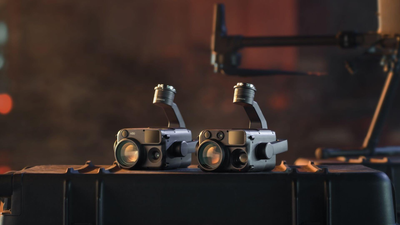
That’s a clear signal that buyers want measurable data, not just images. Enterprise platforms such as the DJI Matrice 4E for mapping and the DJI Matrice 4T for thermal inspection, both available from Coptrz, are built for exactly that work.
Safety leads the business case
Improving work safety is once again the top reason organisations adopt drones, ahead of saving time. Saving money ranks last.
It’s a useful point for anyone building an internal case for drones. Keeping people off roofs, out of confined spaces and away from live assets is often a stronger argument than cost alone.
A more realistic outlook
Respondents rated their expectations for the industry at 6.7 out of 10, against a reality of 6.2. That gap is the smallest since the survey began, which suggests a more mature, grounded market. Hardware and component makers are the most upbeat, while service providers are a little more cautious.
FAQs
What is the biggest challenge for the drone industry in 2026?
Regulation, including certification, BVLOS and night-flight restrictions, according to the Drone Industry Insights survey.
What are commercial drones mostly used for?
Mapping and surveying is the top application, followed by inspection.
Why do organisations adopt drones?
Improving work safety is the main reason, ahead of saving time and cost.
Final thoughts
Getting your team ready for what’s next? Browse the full range of Coptrz drone training courses.