Skip to content


Reddit User Films Stunning Waterfall Canyon With DJI Mini 5 Pro and Avata 2
- by Stefan Gandhi
A pilot on the r/drones subreddit has captured one of the most engaged FPV videos this past week, threading a DJI Avata 2 under a bridge and down a waterfall canyon in Quebec, then cutting the footage together with cinematic DJI Mini 5 Pro shots. The post earned over 1,000 upvotes and a lively discussion about skill, nerve, and the gear behind the flight. Here is what happened, what the community made of it, and what the two-drone approach teaches anyone building their own aerial kit.
A Line Worth Coming Back For
The pilot, posting as u/Kind_Taro_9674, first attempted the flight at Sainte-Ursule Falls in Quebec, Canada, but backed out of the hardest section, staying high above the canyon rather than committing to the line under the bridge and along the water. A week later they returned and flew it properly, diving past the bridge supports and hugging the river through the gorge.
There was a twist. Before the flight, the pilot removed the SD card from the DJI Avata 2, reasoning that a crash into the water would at least not take the day's footage with it. They had forgotten the internal storage was nearly full. The onboard recording cut out mid-flight, and the final edit was rescued by the DVR recording from the goggles, a reminder of why FPV pilots treat the goggles feed as a safety net.
Why The Pilot Paired Two Drones
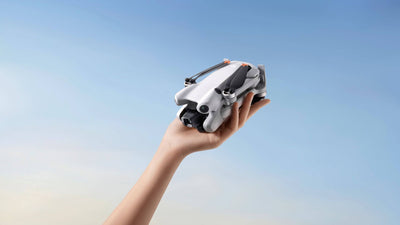
The finished video mixes two very different aircraft. The Avata 2 flew the aggressive FPV line, while a DJI Mini 5 Pro captured the establishing shots that give the location its scale and polish.
That pairing is becoming the standard creator setup, and for good reason. The Avata 2's 155 degree field of view and manual mode agility produce the immersive, diving perspective that makes canyon runs so gripping. The Mini 5 Pro, with its 1-inch sensor and stabilised gimbal, delivers the smooth, colour-rich cinematic frames that anchor an edit. One drone provides adrenaline, the other provides context.
In the comments, the pilot was candid about the trade-offs, noting that the Avata 2 gives up some transmission range compared with the Mini 5 Pro and Mavic series, a fair exchange for its agility and crash resilience in tight spaces.
What The Community Noticed
The r/drones community responded with more than 50 comments, comparing the flight to the Star Wars canyon run and praising the confidence it takes to fly low between moving water, trees, and bridge supports. Viewers picked up on the practical details too, from the difficulty of reading obstacles against a bright sky to questions about controller sensitivity settings and pre-flight planning.
The pilot's answers were a small masterclass in FPV discipline. They travelled to the waterfall twice, flew dry runs in normal and sport modes to learn the space, and only committed to the full line in manual mode once the route felt familiar.
Lessons For Your Own FPV Flying
The story carries three lessons worth stealing. First, scout before you commit. Flying the location in a stabilised mode before switching to manual builds a mental map of the hazards. Second, respect the storage check. A full internal drive cost this pilot their onboard recording, and only the goggles DVR saved the edit. Third, patience pays. Walking away from a line you are not ready for, then returning stronger, is exactly how experienced FPV pilots stay in the hobby long enough to get great.
Choosing Between An FPV Drone And A Camera Drone
You do not have to choose. This video is the argument for owning both, and the two aircraft solve different problems. An FPV drone like the Avata 2 is built for immersion, speed, and proximity. A camera drone like the Mini 5 Pro is built for image quality, flight time, and effortless stabilised footage, all in a sub-250g frame that keeps UK flying simple.
For creators starting out, the Mini 5 Pro is the sensible first aircraft, with FPV as the addictive second purchase once the editing bug bites.
FAQs
What is the difference between an FPV drone and a normal drone?
An FPV drone is flown through goggles that stream live video from the aircraft, giving an immersive first-person view suited to fast, acrobatic flying. A normal camera drone is flown by line of sight with a controller and screen, prioritising stabilised footage, longer flight times, and easier handling.
Is the DJI Avata 2 good for beginners?
Yes, the Avata 2 supports beginner-friendly normal and sport modes with GPS stability before pilots progress to full manual flying. Its ducted propellers make it more forgiving in a crash than traditional FPV builds, which is why it is a popular first FPV drone.
Do I need to register a DJI Mini 5 Pro in the UK?
Yes, the Mini 5 Pro has a camera, so the operator needs a CAA operator ID displayed on the aircraft, and pilots must pass the free online test for a flyer ID. Its sub-250g weight does, though, allow flying in the A1 category close to people.
Can you fly a drone over a waterfall?
Yes, in most locations, provided the airspace is uncontrolled, you keep the aircraft within the rules of your category, and the land is not subject to local restrictions. Waterfalls add practical risks, including spray, turbulence, and signal blocking from canyon walls, so scout carefully and fly dry runs first.
Final Thoughts
This waterfall canyon video is a perfect snapshot of where creative drone flying sits in 2026. A pilot with the discipline to walk away, return, and fly the line in manual mode, an FPV aircraft agile enough to survive the attempt, and a camera drone polished enough to make the edit sing. The two-drone formula behind it is one any aspiring aerial creator can copy.
Start building your own setup with the DJI Mini 5 Pro Fly More Combo and the full consumer drone range at the Coptrz official online store.