Skip to content


DJI Matrice 5T vs 4T: What’s Actually Changed?
- by Megan Wood
Already flying a Matrice 4T, or weighing up both drones for your first thermal programme? Here’s how the Matrice 5T compares, and which upgrades make a real difference on the job.
Sharper thermal and longer zoom
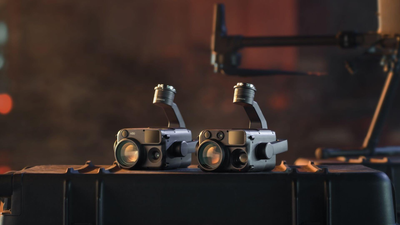
The thermal camera is the biggest step up. The Matrice 4T has a 640 x 512 thermal sensor, while the Matrice 5T doubles that to 1280 x 1024, four times the pixels. With super-resolution switched on, the 5T reaches 2560 x 2048, against 1280 x 1024 on the 4T.
-
Wide camera: a larger 1/0.98-inch sensor, up from 1/1.3-inch, with full-colour night vision down to 0.01 lux
-
Telephoto: hybrid zoom up to 176x, against 112x
- Laser rangefinder: up to 3km head-on and 1.2 km at an angle, against 1.8 km and 600 m
For solar farm, roof and substation inspections, that means spotting smaller faults from a safer distance.
More flight time and faster charging
The Matrice 5T carries a 215.2 Wh battery, more than double the 4T's 99.5 Wh. Maximum flight time rises from 49 to 59 minutes, and top speed from 21 to 23 m/s. Both figures are maximums in ideal, windless conditions.
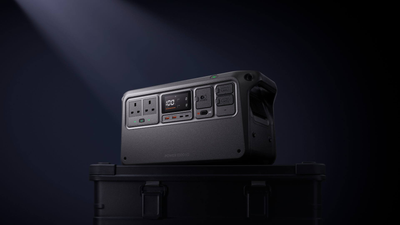
Charging has been rethought too. The 5T's charging hub is rated at 515 W, against 100 W, with active cooling and a faster charge rate. Three batteries are enough for continuous operation, so teams on long searches or big inspection sites spend less time waiting.
Obstacle sensing and airspace awareness
The 4T uses binocular vision with a 3D infrared sensor underneath. The 5T adds 360° LiDAR that detects wires from 32 m, millimetre-wave (mmWave) radar facing forwards, up and down, and colour vision all round. Mixing sensor types keeps detection more dependable in rain, fog and low light.
Both drones have ADS-B receivers for nearby crewed aircraft. The 5T adds a Remote ID receiver, so it can also alert you to other drones. The 5T is also rated IP55 for dust and water protection.
Louder speaker, brighter spotlight
-
AS2 speaker: 35 W and up to 120 dB at 1 m, against 15 W and 114 dB on the AS1, with broadcasts reaching 400 m rather than 300 m
- AL2 spotlight: 60 W against 32 W, with flood and spot modes and tilt up to +90°, so it can light the underside of bridges and structures
Which should you choose?
Here are the key specs side by side, with the Matrice 5T first and the Matrice 4T second.
-
Thermal camera: 1280 x 1024 vs 640 x 512
-
Wide camera sensor: 1/0.98-inch vs 1/1.3-inch
-
Hybrid zoom: 176x vs 112x
-
Laser rangefinder: 3 km vs 1.8 km
-
Max flight time: 59 min vs 49 min
-
Max speed: 23 m/s vs 21 m/s
-
Battery: 215.2 Wh vs 99.5 Wh
-
Charging hub: 515 W vs 100 W
-
Obstacle sensing: LiDAR, mmWave radar and vision vs vision and 3D infrared
- Remote ID receiver: yes vs no
FAQs
What is the biggest difference between the Matrice 5T and Matrice 4T?
The thermal camera. The 5T has a 1280 x 1024 sensor, four times the pixels of the 4T's 640 x 512.
Does the Matrice 5T fly longer than the Matrice 4T?
Yes. The 5T's maximum flight time is 59 minutes, against 49 minutes for the 4T, in ideal conditions.
Can the Matrice 5T detect other drones?
Yes. It has a built-in Remote ID receiver alongside ADS-B, while the 4T only has ADS-B.
How far can the Matrice 5T’s laser rangefinder measure?
The 5T measures up to 3 km head-on, against 1.8 km on the 4T.
Is the Matrice 4T still a good choice?
Yes. It remains a capable, compact thermal drone for routine inspection and public safety work.
Final thoughts
Thinking about upgrading your thermal fleet? Find out more about the DJI Matrice 5T from Coptrz.