Skip to content


How DJI Dock 3 Covers An Entire District In Thailand
- by Stefan Gandhi
DJI Enterprise released a two-minute workflow video in August 2026 showing how Samut Songkhram, the smallest province in Thailand, uses DJI Dock 3 to cover a whole district. According to the video, a drone deploys the moment a call comes in and gives officers an aerial view before ground teams arrive, across an area that runs from the Maeklong Railway Market to late-night street racing on the trunk road. It is a compact, unusually clear illustration of what a single dock can realistically hold, and the geography is what makes it interesting.
What The DJI Video Shows In Samut Songkhram
The workflow follows the same shape as other dock-based public safety deployments. A call arrives, the dock opens, the aircraft launches without anyone driving to the scene, and the live feed reaches officers before ground units get there.
Two use cases anchor it. The first is the Maeklong Railway Market, known locally as Talat Rom Hup or the umbrella pulldown market, where stallholders retract awnings and slide produce back from the rails four times a day as a train passes through. It is a densely packed crowd environment where an aerial view is worth a great deal.
The second is late-night street racing, and that has a documented history here. Thai media reported in March 2025 that Samut Songkhram Provincial Police were running an anti-street-racing operation on Rama II Road, the trunk route in from Bangkok, using three hand-launched drones plus one larger aircraft with three operators and two ground officers. The reported result was over forty arrests in fifteen days. Racers were mustering just over the boundary in neighbouring Samut Sakhon and racing about two kilometres into Samut Songkhram jurisdiction.
That earlier operation used no dock and no automated launch. Reading the two together, the Dock 3 deployment looks like the same programme growing up, though DJI has not stated that connection directly.
Why One Dock Can Cover A District This Size
The claim that one dock covers an entire district sounds ambitious until you check the map. Samut Songkhram covers 416.7 km² in total, the smallest of Thailand's provinces, divided into just three districts, and sits 63 km from Bangkok at the mouth of the Mae Klong River.
A DJI Matrice 4D or Matrice 4TD flying from Dock 3 has a maximum operating radius of 10 km, which describes a circle of roughly 314 km². That is most of the province, let alone one of its three districts. The arithmetic is ours rather than DJI's, but it explains why this particular province is such a neat fit for a single-dock deployment. In a larger, more spread-out area the same claim would not stand up.
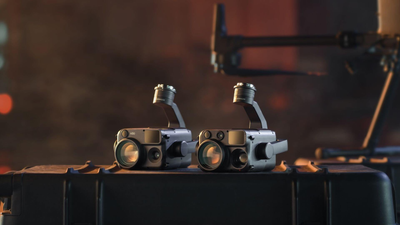
Endurance does the rest. The Matrice 4D and 4TD deliver up to 54 minutes of flight time and 47 minutes hovering, with a maximum flight distance of 43 km, extending to a 25 km operating radius when paired with the D-RTK 3 Relay in its fixed deployment version.
From Hand Launched Drones To A Dock
The difference between officers hand-launching aircraft and a dock responding to a dispatch call is not about the flying. It is about who has to be awake and where.
A hand-launched patrol needs a team on the ground at the right place at the right time, which for street racing means guessing when and where it will happen. A dock removes that guess. The aircraft sits charged and ready, the launch is triggered by the call, and one operator can supervise a far wider area from a control room.
DJI publishes three timing figures for this setup, each with test conditions worth quoting alongside it. Eyes on scene in under 100 seconds refers to reaching a point 1 km away at 100 m altitude, measured at roughly 25°C in still air with a 15% battery reserve. Time to airborne in under 15 seconds runs from command receipt to the cover fully opening, and excludes the climb.
Independently, Chula Vista Police Department in California, which runs the longest-established programme of this kind, reported more than 25,000 dock missions as of May 2026. The drone arrived ahead of ground units on 17,170 of them, averaging 96.98 seconds across that subset, which lands remarkably close to DJI's laboratory figure.
The Kit Behind The Workflow
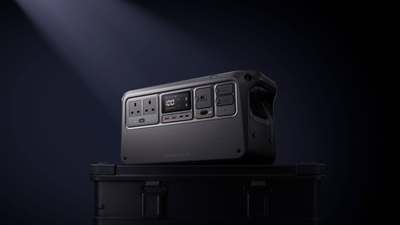
DJI Dock 3 launched on 27 February 2025 and is built for exactly this kind of continuous duty. It weighs 55 kg without an aircraft, measures 1760 by 745 by 485 mm with the cover open and 640 by 745 by 770 mm closed, and carries an IP56 ingress rating. Operating range runs from minus 30°C to 50°C, with pre-heating handling the coldest end.
Charging takes 27 minutes to bring an aircraft from 15% to 95% at 25°C, drawing up to 800 W, and a 12 Ah lead-acid backup keeps the dock alive for over four hours during a mains outage. It houses one aircraft, either the Matrice 4D or the thermal 4TD, and runs through DJI FlightHub 2 or FlightHub 2 On-Premises.
Dock 3 is also DJI's first dock designed for mobile vehicle-mounted deployment, supporting two docks on a single vehicle for continuous drone rotation, plus cloud-based location calibration so it can be relocated. For a province with one high-incident trunk road, that flexibility is more than a footnote.
What This Model Means For UK Forces
The constraint in the UK is regulatory rather than technical. Routine flights beyond visual line of sight are not yet standard, so a programme of this shape needs a granted operational authorisation. The Civil Aviation Authority has set out a delivery path towards routine integrated beyond visual line of sight operations by 2027, and its Unmanned Aircraft Systems Traffic Management consultation closes on 28 August 2026. UK forces planning dock-based response are building towards that date rather than around today's rules.
FAQs
What is DJI Dock 3?
DJI Dock 3 is an automated drone hangar that stores, charges and launches a single DJI Matrice 4D or 4TD aircraft. It weighs 55 kg without the aircraft, is rated IP56, operates from minus 30°C to 50°C, and recharges an aircraft from 15% to 95% in 27 minutes.
How far can DJI Dock 3 fly?
The Matrice 4D and 4TD have a maximum operating radius of 10 km from the dock and a maximum flight distance of 43 km. Adding the D-RTK 3 Relay in fixed deployment extends the operating radius to 25 km.
Can DJI Dock 3 be mounted on a vehicle?
Yes. Dock 3 is DJI's first dock designed to support mobile vehicle-mounted deployment, and two docks can be carried on one vehicle to keep a drone continuously available.
How fast can a drone reach an incident?
DJI quotes under 100 seconds to a point 1 km away at 100 m altitude under ideal test conditions. Chula Vista Police Department reported a 96.98 second average across the 17,170 missions where its drone beat ground units.
Final Thoughts
What makes the Samut Songkhram example useful is not scale, it is proportion. A 416.7 km² province with three districts and one high-incident trunk road is almost exactly the size a single dock and a 10 km operating radius can genuinely hold, which is why the coverage claim survives scrutiny here. Any force weighing up a dock programme should start with that arithmetic, mapping its own patch against the aircraft's radius before anything else.
To scope a dock-based response programme for your force or organisation, our enterprise team can advise on dock siting, aircraft selection and the operational authorisation route. Email sales@coptrz.com or call 0330 111 7177 to start that conversation.