Skip to content


Why Eight Of The Ten Biggest Oil And Gas Companies Fly Elios Drones
- by Stefan Gandhi
Flyability states that eight of the ten largest oil and gas companies in the world have used an Elios drone to carry out an inspection. That is a striking level of adoption for a niche piece of equipment, and it did not happen because the aircraft is clever. It happened because confined space inspection in refineries, storage terminals and offshore platforms is slow, expensive and dangerous, and the Elios 3 takes the person out of the space. This article looks at what those operators are using the drone for, the figures behind the decision, and what it means for UK inspection teams.
The Problem Elios Drones Were Built To Solve
Oil and gas assets are full of places people should not be. Storage tanks, pressure vessels, boilers, furnaces, flare stacks, chimneys and FCC units all need regular internal inspection, and the traditional way to do it is to shut the asset down, ventilate it, build scaffolding or rig rope access, then send an inspector inside with a torch and a camera.
Every step in that sequence costs money and carries risk. Scaffolding inside a large tank can take days to erect before a single photograph is taken. Confined space entry requires permits, gas monitoring, rescue teams on standby and a written justification for putting a person somewhere that might contain residual hydrocarbons. The asset is offline the whole time, and downtime in this industry is measured in tens of thousands of pounds a day.
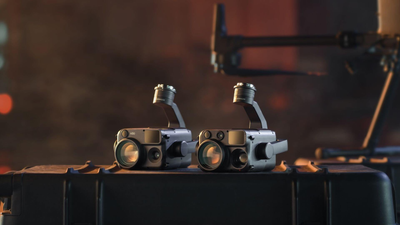
The Flyability Elios 3 was designed for exactly this environment. A carbon fibre cage surrounds the airframe so the drone can bump into walls, pipes and internals without crashing, and a collision resilient flight controller lets it recover even if it flips over. It flies without GPS, using onboard LiDAR to map its surroundings in real time, and carries a 4K camera, a thermal camera and dust proof 16,000 lumen lighting into spaces that are pitch black and full of particulates.
What The Numbers Say
Flyability's oil and gas figures give a clear picture of why procurement teams sign off. According to the company, drone inspection is up to 75 percent cheaper than inspection from scaffolding, and the Elios 3 UT payload can take up to 250 ultrasonic thickness measurements in an hour, delivering data that meets API and EEMUA inspection standards.
The customer case studies put those percentages into context. At TotalEnergies' Antwerp site, inspection engineer Pieter Haxelmans reports a saving of around €15,000 per storage tank inspection, largely from scaffolding that no longer needs to be built. Turner Specialty Services inspected 600 metres of elevated pipe rack in two days, assessing insulation, valves and material condition at 60 percent less cost than the conventional method.
Offshore, Shell and inspection contractor CAN have deployed Elios drones on platforms as an alternative to rope access, citing safety and efficiency as the drivers. HelleniQ Energy uses the aircraft across its refineries to gather visual, LiDAR and ultrasonic thickness data from tanks and pipe racks in a single deployment. Classification society Bureau Veritas, through its Marine and Offshore president Alexander Gregg-Smith, has described UT drones as a promising evolution of remote inspection for FPSO and FSRU vessels.
Why Ultrasonic Thickness From A Drone Matters
Visual inspection tells you what a surface looks like. Ultrasonic thickness testing tells you how much steel is left, which is the number that decides whether a vessel stays in service. Traditionally that measurement requires a technician to place a probe by hand on the wall, which means reaching the wall, which means scaffolding or ropes.
The Elios 3 UT payload puts the probe on the drone. The pilot flies to the measurement point, the aircraft holds contact and the reading is logged with its position on the 3D model generated by the onboard LiDAR. An inspector on the ground sees the thickness value appear in real time and can move on to the next point in seconds. That is where the 250 measurements per hour figure comes from, and it is why a class society is willing to talk about it in the context of vessel surveys.
From Inspection To A Digital Record
The LiDAR sensor does more than keep the drone stable. It builds a point cloud of the whole space during the flight, and Flyability's Inspector 4.0 software places every photograph, thermal image and UT reading on that model. An inspector reviewing the data afterwards can click a point of interest and see exactly where in the vessel it sits, then compare it against the same point on the previous inspection.
For an asset integrity team that is the difference between a folder of photographs and a defensible record. Repeat inspections become comparable, defects can be tracked over time, and a report that once took a week to compile from notes and sketches comes out of the software with the geometry already in place.
Specialist Payloads For Specialist Sites
Oil and gas facilities rarely present just one hazard. Beyond the standard inspection payload and the UT payload, Flyability offers a gas sensor for flammable gas detection, a RAD payload for radiation measurement in facilities that use radioactive sources, and a surveying payload for higher precision LiDAR capture. A tether power unit extends flight time for longer missions where a 12 minute battery would otherwise mean repeated relaunches.
The result is a single platform that can visually inspect a tank, measure its wall thickness, check for gas and produce a 3D model of the interior without anyone entering it.
What This Means For UK Operators
The UK has a large installed base of ageing process plant, from North Sea assets to onshore refineries, terminals and chemical works, and the regulatory pressure to inspect it thoroughly is not easing. The eight out of ten figure matters because it shows that the largest and most risk averse operators in the sector have already validated the approach. A UK terminal or contractor adopting the Elios 3 today is following a path the majors have already walked.
Coptrz supplies the Elios 3 and its payloads and delivers Flyability model specific training through the Coptrz Academy, so a team can go from first flight to confident confined space inspection with UK based support behind it.
FAQs
What is the Elios 3 drone used for?
The Elios 3 is a caged indoor drone used to inspect confined and hazardous spaces such as storage tanks, pressure vessels, boilers, chimneys and ship holds. It captures 4K video, thermal imagery and LiDAR 3D models, and can carry payloads for ultrasonic thickness, gas and radiation measurement.
How much does drone inspection save compared to scaffolding?
Flyability reports that Elios drone inspection is up to 75 percent cheaper than scaffolding based inspection. TotalEnergies' Antwerp site quotes a saving of around €15,000 per tank inspection, and Turner Specialty Services reported a 60 percent cost reduction on a pipe rack inspection.
Can drones do ultrasonic thickness testing?
Yes. The Elios 3 UT payload carries an ultrasonic probe that the drone presses against the surface to take a wall thickness reading. Flyability states it can log up to 250 measurements per hour, each tagged to its position on the LiDAR model.
How long can the Elios 3 fly?
The Elios 3 flies for up to 12 minutes on a battery, or around 9 minutes with the LiDAR surveying payload fitted. A tether power unit is available for longer missions inside a single asset.
Final Thoughts
The largest oil and gas companies did not adopt Elios drones for novelty. They adopted them because confined space inspection was costing them shutdown days, scaffolding budgets and, above all, exposure of people to hazardous atmospheres. The Elios 3 removes the person from the space, delivers the thickness data the integrity engineer needs, and leaves behind a 3D record that makes the next inspection better than the last.
Ready to bring confined space inspection in house? Explore the Flyability Elios 3 at the Coptrz official online store, or talk to the Coptrz sales team at sales@coptrz.com or on 0330 111 7177.