Skip to content


What Is The RPC-L1 Course And How Does It Work?
- by Stefan Gandhi
The UK CAA's drone pilot qualification framework is changing. The General Visual Line of Sight Certificate (GVC) — the qualification that has underpinned commercial drone operations in the UK for years — is being phased out, with no new GVCs issued after 31 December 2027. In its place sits a modular new framework built around the Remote Pilot Certificate, and the first step is RPC-L1 Part A. If you fly commercially in the UK, plan to, or hold a GVC and are wondering what to do next, this guide explains exactly what RPC-L1 is, who it is for, and how the course actually works.
What Is The RPC-L1 Part A Qualification?
The RPC-L1 Part A is a CAA-recognised certification that allows drone pilots to operate in the Specific Category under the UK SORA (Specific Operations Risk Assessment) framework. It is the direct replacement for the GVC, and from January 2026 the CAA expects RPC certificates to be used for UK SORA-based Operational Authorisations.
Two things make it different from the qualification it replaces. First, it sits inside a tiered framework — RPC-L1 Part A unlocks the foundation, with Part B, L2 and L3 building towards BVLOS (Beyond Visual Line of Sight) and more complex operations. Second, it shifts the centre of gravity from theoretical knowledge testing to competency. The assessment is built around real-world decision making, threat and error management, and demonstrable handling under operational scenarios, rather than purely a written exam.
It is available for multirotor and fixed-wing platforms as separate aircraft categories, with a short Bridging Course to add the second category once you hold the first.
Who Is The RPC-L1 Course For?
The course is aimed at:
- Professional drone pilots already operating, or preparing to operate, in the Specific Category.
- Operators who want a future-ready qualification aligned to UK SORA, not a legacy GVC.
- New entrants to commercial drone work who want to start on the new framework rather than train on a retiring one.
- Existing GVC holders converting to the CAA's new pilot competence framework.
- Enterprise, public sector and infrastructure teams that need defensible evidence of pilot competency.
There are no flying-hours prerequisites. New entrants are welcome. You do, however, need to hold a valid UK CAA Flyer ID before starting — completing the Flyer ID is the first stage of the course itself.
What The RPC-L1 Course Covers
The qualification is built around a seven-stage structure that moves you from regulatory foundation through theory, into practical instruction, assessment and finally certificate issue:
- Obtain your UK CAA Flyer ID.
- Theoretical Knowledge Instruction — airspace assessment, restrictions and CAA-compliant flight planning.
- Theoretical Knowledge Assessment — risk management and preparing for safe operations.
- Ground and Practical Flight Instruction — operational principles for compliant flights.
- Practical Flight Assessment — real-world scenarios with a Coptrz instructor.
- Issue of the RPC-L1 Part A Certificate.
- Apply for your CAA Operational Authorisation to fly commercially.
The Practical Flight Training and Assessment is the part that has changed most relative to the GVC. Topics include operational planning and risk assessment aligned to UK SORA, aircraft handling and control, navigation and airspace awareness, abnormal and emergency procedures, decision making, threat and error management, and compliance with operating procedures and authorisations. The course does not require you to produce an Operations Manual as an assessed element — though one is still legally required to operate in the Specific Category, which is where post-course support like our PDRA-01 Operations Manual Review Service comes in.
How The RPC-L1 Course Works In Practice
There are three primary routes through the qualification, plus a Bridging Course for adding a second aircraft category.
Online Theory + In-Person Practical
Self-paced online theory followed by a single in-person practical day. There are no fixed start dates, so you can begin the theory immediately and book the practical when you are ready. You must complete all online theory modules and pass the online theory exam before the practical can be booked. This is the most flexible and lowest-cost route — list price £697 plus VAT.
Face-To-Face Classroom Course
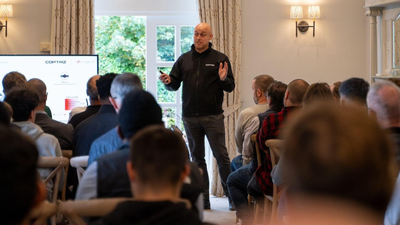
A four-day classroom course (typically Tuesday to Friday) covering theory instruction, theory assessment, ground and practical flight instruction and the final practical flight assessment in one block. Best for pilots who learn faster in person, or for teams that want everyone trained together. List price £1,194 plus VAT.
GVC To RPC-L1 Part A Conversion
For existing GVC holders. There is no RPC-L1 Part A theory exam in this route, but theory training is still completed alongside the full practical flight instruction and assessment — which reflects the competency-led nature of the new qualification. List price £497 plus VAT.
RPC-L1 Part A Bridging Course
For pilots who already hold RPC-L1 Part A on one aircraft category and want to add the other (rotorcraft or fixed wing). Practical-only — no repeat theory training or examination.
Practical instruction and assessment is delivered at our CAA-approved sites in Leeds and Kent, using Coptrz-owned aircraft under Coptrz insurance.
What You Get On Completion
Pass the course and you are issued an RPC-L1 Part A certificate. From there you can apply for your CAA Operational Authorisation, which is the document that actually permits paid commercial work in the Specific Category. The certificate is also the foundation of the modular pathway — RPC-L1 Part B, RPC-L2, RPC-L3 and ultimately BVLOS operations all build from it. Coptrz pilots also retain access to our Coptrz Academy e-learning platform with 300+ online courses.
FAQs
Is the RPC-L1 the same as the old GVC?
No. The RPC-L1 Part A is the direct replacement for the GVC and sits inside a new modular framework. The GVC is being phased out, with no new GVCs issued after 31 December 2027. From January 2026, the CAA expects RPC certificates to be used for UK SORA-based Operational Authorisations.
Do I need flying experience to start?
No. You don't need any prior flying hours. You do need to hold a valid UK CAA Flyer ID before starting — and obtaining that Flyer ID is the first stage of the course itself.
How long does the RPC-L1 course take?
It depends on the route. The online theory + practical route can be completed in a few days of self-paced study followed by a single practical day. The face-to-face classroom route is typically four days end to end (Tuesday to Friday).
Where does the practical assessment take place?
At our CAA-approved practical training sites in Leeds and Kent, using Coptrz-owned aircraft under Coptrz insurance.
Does this course qualify me to do commercial drone work?
The RPC-L1 Part A certificate is what enables you to apply for your CAA Operational Authorisation. The Operational Authorisation is the document that actually permits commercial operations in the Specific Category. The course is designed for that pathway end to end.
Can I progress beyond RPC-L1 Part A?
Yes. RPC-L1 Part A is the foundation of a modular pathway — Part B, L2 and L3 unlock more complex operations including BVLOS. Whichever direction you take your operation, Part A is the entry point.
How much does the RPC-L1 cost?
The online route is £697 plus VAT, the four-day in-person classroom course is £1,194 plus VAT, and the GVC to RPC-L1 Conversion Course is £497 plus VAT. The Bridging Course for an additional aircraft category is priced on enquiry.
Final Thoughts
If you operate commercially in the UK — or plan to — the RPC-L1 Part A is the qualification that matters from here. The GVC is retiring, the CAA is moving Operational Authorisations onto the RPC framework, and the new course is designed around the way modern drone operations actually run: competency-led, with a clear progression path through to BVLOS. Whether you are new to commercial flying, converting from the GVC, or training a team, the route is now well-defined.
Ready to get certified? Start your RPC-L1 Part A with the UK's leading CAA-approved training provider — book the RPC-L1 Part A Online Drone Training Course and begin the theory at your own pace today.