Skip to content


How Drones Help A Swedish Rescue Team Find Missing People
- by Stefan Gandhi
A DJI Enterprise case study filmed with SAR Sweden shows how a volunteer search and rescue organisation uses the DJI Matrice 4TD to find missing people alongside search dogs and the Swedish police. The film follows a live callout from the moment the alert goes out to the point a missing boy is located in woodland. This article breaks down how the team works, where the drone fits into an established search structure, and what UK responders can take from it.
Who SAR Sweden Are And What They Do
SAR Sweden is a voluntary organisation founded in 2010 that assists the Swedish police authority in searching for missing people. The team is not a replacement for the police operation. It works underneath police command as an additional search resource.
The callouts described in the film cover the range any missing person unit will recognise, from a missing child to an older person who has walked away from a familiar place. Each profile behaves differently once someone is out in open country, and each rewards a different search pattern. That variety is why the team invests in aerial capability, because a resource that only works in one scenario is of limited use to a commander who does not yet know which scenario they face.
How A Live Search Callout Runs
The sequence in the film shows the drone as one element of a structured process rather than the process itself.
When the alert comes in, the team packs the vehicle immediately and drives to the rendezvous point. Information about the missing person and the circumstances reaches them on the way and again on arrival. Command then assigns each team a sector to search, and that is the moment the aerial element gets its task. As one team member puts it, they move to the assigned sector and put the drone up to deliver what command has asked for, either overview imagery to establish what the ground looks like or an active aerial search.
Ground search runs alongside it. Teams often begin by driving the linear features a missing person tends to follow, then move into assigned sectors and work with a dog. The drone covers the same sector at the same time, so the aerial and canine elements search in parallel rather than in sequence.
The Moment The Drone Finds Someone
The film includes a live find. The radio call is clipped and functional, reporting a person located in the forest, describing grey trousers and a dark blue jumper, and requesting a dog position.
What happens next matters most. The drone held the fix on the missing boy and directed the ground team toward him, guiding them on which way to move through the trees. When the team reached him they were able to take care of him quickly. One of the team describes the find as an incredible feeling, which is the human side of a very procedural piece of work.
The operational lesson is about handover rather than detection. Spotting someone from the air is only half the job in dense woodland, where a ground team a hundred metres away can have no line of sight at all. Holding position overhead and talking the team in is what converts a sighting into a rescue.
Working Alongside Police Aviation
SAR Sweden does not operate in isolation. The team frequently flies alongside police helicopters and the police authority's own drone operators, coordinating rather than duplicating. That coordination is what changes the value of the aircraft. As the team puts it, when everyone works together the drone becomes more than a tool. It saves time, and in the best case it saves lives.
Why The DJI Matrice 4TD Suits Search And Rescue
The aircraft in the case study is the DJI Matrice 4TD, and the reasons for that choice are practical rather than headline grabbing.
Search operations do not wait for good weather. Callouts happen at night, in rain, and in terrain with no road access. DJI highlights the rugged, weather resistant design of the Matrice 4TD as the reason it suits forests, mountains, and difficult conditions, and an aircraft that cannot launch in rain is of no use to a team called out in it.
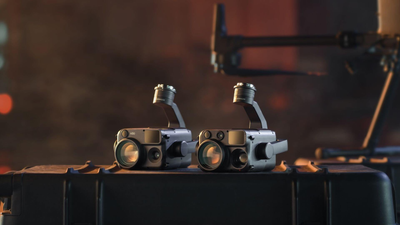
The thermal payload is the other half of the case. In woodland with a broken canopy, a human heat signature is often detectable when the person is visually obscured, particularly at night or first light when the ground has cooled. Pairing thermal with a high zoom visual camera lets the operator confirm a detection before committing a ground team, which is exactly the sequence the film shows.
FAQs
How do drones help find missing people?
Drones give search teams rapid overview imagery of a sector, cover ground far faster than a foot team, and use thermal cameras to detect body heat in vegetation or darkness. Once a person is spotted, the aircraft holds position overhead and guides the ground team in, which is often the difference between a sighting and a recovery.
What drone do search and rescue teams use?
Teams typically use enterprise thermal drones built for poor weather and difficult terrain. SAR Sweden operates the DJI Matrice 4TD, which combines a thermal camera with a high zoom visual sensor in a weather resistant airframe suited to forests and mountains.
Can drones fly in the rain for search and rescue?
Weather resistant enterprise aircraft are designed to operate in rain and challenging conditions, which is essential for search work because callouts do not wait for clear skies. Consumer camera drones are not rated for this and should not be relied on for emergency response.
Do thermal drones work in woodland?
Thermal drones perform well in woodland with a broken canopy, particularly at night or early morning when ambient ground temperature has dropped and a human heat signature stands out. Dense summer canopy reduces effectiveness, which is why aerial search is used alongside dogs and ground teams rather than in place of them.
Who can operate a drone for search and rescue in the UK?
Search and rescue flying in the UK requires the appropriate CAA operational authorisation and remote pilot competency for the category of operation, and most emergency response work sits in the Specific category. Volunteer teams normally operate under a formal arrangement with the police or the relevant lead authority.
Final Thoughts
The SAR Sweden case study is a useful corrective to the idea that a drone replaces a search team. What it actually shows is a drone slotted into an existing command structure, tasked by sector, flown alongside dogs and police aviation, and used to guide people on the ground to a person they cannot yet see. The technology earns its place by shortening the time between the alert and the find, and in search and rescue that time is the whole game.
Explore the DJI Matrice 4TD at the Coptrz official online store. To build a search and rescue capability around thermal drones and the training to run them, reach out to our sales team at sales@coptrz.com or on 0330 111 7177.