Skip to content


How Returkraft Cut A Week Of Boiler Scaffolding With The Elios 3
- by Stefan Gandhi
Kjetil Mikaelsen is a maintenance engineer at Returkraft, a waste to energy plant in Norway. His account of what changed when the Elios 3 arrived is worth repeating almost word for word, because it is not a story about a drone. It is a story about a week of scaffolding that no longer has to be built.
The benefit, in his words, is mainly time.
What Boiler Inspection Used To Involve
Before the Elios 3, inspecting the boiler at Returkraft meant scaffolding. Not scaffolding in one place, but scaffolding in every empty pass, the first, second and third, and the horizontal pass as well.
That took nearly a week. Only once it was up could anyone begin the actual inspection, which meant a person climbing into the boiler with a flashlight and a camera and working their way around by hand.
Mikaelsen raises a problem with that method which anyone who has reviewed inspection photographs will recognise. You end up wondering what the picture was of, because it is not localised. A folder of images from inside a boiler, with no spatial reference attached to any of them, is very difficult to turn into a decision. Which tube was that? How far up? Was it the same spot flagged last year?
With the drone, that question disappears. You fly in and do what you need to do, in a much shorter time.
The Economics Are Blunt
The financial case at Returkraft does not require a spreadsheet. One scaffolding setup, Mikaelsen says, is nearly the price of the drone. Doing ultrasonic thickness testing in the boiler's third pass alone meant the aircraft had paid for itself.
That is the arithmetic that keeps appearing wherever confined space inspection is routine. The equipment is not being compared against nothing. It is being compared against scaffolding, permits, standby rescue cover and a plant that is offline while all of it happens. Against that baseline, the aircraft is rarely the expensive part.
Three Inspections, In Sequence
What makes the Returkraft workflow instructive is that the drone is not used once. It is used at three distinct points, each answering a different question.
First, a safety check. The boiler is prone to slagging and to slag building up on internal surfaces. Before any scaffolding crew goes in, the drone flies to verify the working environment is safe. This is the part that tends to get overlooked in cost comparisons, because it does not show up as a line item. Sending an aircraft into an unknown space ahead of a person is simply a better order of operations.
Second, a refractory assessment. Once the space is known to be safe, the drone inspects the refractory lining to establish how much is missing. Mikaelsen describes the purpose plainly, which is to get a good scope early on of what needs fixing. Knowing the extent of the repair before the outage is properly under way is the difference between a planned job and an improvised one.
Third, ultrasonic thickness measurements. This is the data that decides whether tubes stay in service.
UT Readings From Inside The Boiler
Ultrasonic thickness testing tells you how much steel is left in a tube wall. Traditionally it requires a technician to hold a probe against the surface, which means physically reaching the surface, which brings you back to scaffolding.
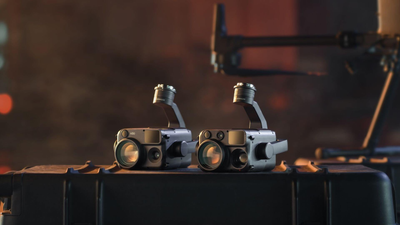
The Elios 3 UT payload carries the probe. At Returkraft this year, running the high capacity battery, the team was logging around 20 to 25 measurements per battery. Mikaelsen notes that it is starting to get quick.
The tether changes the constraint again. With a tethered power supply, the aircraft can stay inside the boiler as long as the gel holds out, or as long as the team wants to keep flying. Battery endurance stops being the thing that ends the session.
His verdict on the non-destructive testing capability is short. The NDT solution on the Elios has been proven to be really good.
What Happens After The Flight
The inspection data uploads into Inspector, Flyability's review software, and this is where the localisation problem from the flashlight era gets solved.
The reviewer works with a 3D point cloud of the boiler interior, with points of interest pinned in position, alongside the video feed. Reviewing that footage, the team looks for cracks, for the condition of fittings on the steel tubes and for slag build up.
On the UT side, they review thickness at every point of interest and across all the measurements taken. That determines whether tubes need repair or replacement. Then comes the step that only works because the data is positioned rather than loose, which is comparing this year's readings against last year's to see whether anything has developed.
Year on year comparison of a specific point on a specific tube is the foundation of asset integrity management. It is close to impossible with a folder of unlabelled photographs and straightforward with a localised model.
Localisation Is The Real Feature
Asked what makes the system good, Mikaelsen does not name the camera or the flight time. He says the localisation is what makes it really good, because you know where you have been and you can pinpoint where you have been.
The operational payoff follows directly. If you find any low spots, you can put in the scaffolding you need to fix that, and have the welders at the correct place.
That is the sentence that reframes the whole exercise. Scaffolding does not vanish from the plant. It stops being a prerequisite for finding the problem and becomes a targeted response to a problem already located. Instead of a week of scaffolding across four passes so that someone can go and look, you fly, you find the thin spots, and you build access only where the welders actually need to stand.
Why This Applies Beyond Waste To Energy
Returkraft is a waste to energy plant, but the pattern transfers to any facility with large fired or pressurised internal volumes. Biomass boilers, conventional thermal plant, process heaters, furnaces and flare stacks all present the same combination of a confined space, a hazardous atmosphere, an asset that must be offline to inspect, and a requirement for repeatable thickness data.
UK operators face an additional pressure. Much of the installed base is ageing, outage windows are tightly scheduled, and confined space entry carries a regulatory burden that grows heavier the more of it you do. An inspection method that removes the person from the space and produces better data than the method it replaces addresses both at once.
FAQs
How much time does drone boiler inspection save?
At Returkraft, traditional inspection required nearly a week of scaffolding across the first, second, third and horizontal passes before any inspection could begin. The Elios 3 removes that setup entirely for the inspection phase, so the team flies in and gathers data in a fraction of the time.
Does a drone inspection pay for itself?
Returkraft's maintenance engineer reports that one scaffolding setup costs nearly as much as the drone, and that carrying out UT measurements in the boiler's third pass alone meant the aircraft had already paid for itself.
How many UT measurements can the Elios 3 take per battery?
Returkraft recorded around 20 to 25 ultrasonic thickness measurements per high capacity battery. Using the tether power supply, the aircraft can remain inside the boiler for as long as the gel lasts or the team wishes to keep flying.
What does localisation mean in drone inspection?
Localisation means every image, video frame and UT reading is tagged to its position within a 3D model of the space, built by the drone's onboard LiDAR. It lets inspectors pinpoint exactly where a defect sits, compare the same point between years, and direct scaffolding and welders to the precise location.
Can drones replace scaffolding for boiler inspections?
For the inspection itself, yes. Scaffolding is still needed for repair work, but it becomes targeted. The drone locates the defects first, so access is built only where welding or replacement is required rather than across every pass on the chance that something is found.
Final Thoughts
The Returkraft experience is a useful corrective to the idea that inspection drones are about replacing people with technology. What actually changed is the order of the work. The boiler gets surveyed before anyone commits a week of labour and a scaffolding budget to it, the findings arrive with their coordinates attached, and the repair effort goes exactly where the data says it should. The welders still go in. They just go straight to the right place.
Want to bring boiler and confined space inspection in house? See the Flyability Elios 3 and its UT payload at the Coptrz official online store, or call the team on 0330 111 7177 to talk through your outage schedule.