Skip to content


Inside Cargill’s Grain Bin Inspections With The Flyability Elios 3
- by Megan Wood
Grain bins and silos are some of the hardest assets on a food or farming site to inspect safely. A recent Flyability case study with Cargill shows what changes when a collision-tolerant drone does the job instead of a person on a rope.
Why grain bin inspections are so hard
Cargill’s bins hold corn, soybeans, wheat and other grain, and each one is usually checked once a year, with a deeper look every four to five years. Some bins are around 120 ft (roughly 37 m) wide, and large sites can have more than 500 of them.
Traditionally, that meant building scaffolding or sending an inspector down on rope access into a dark, dusty, confined space more than 100 ft high. Each bin took around four hours, and a rope-access inspector hanging in the centre of a wide bin often couldn’t get close enough to the walls to see much detail.
How the Flyability Elios 3 handles the job
Cargill has flown Elios drones for more than five years across the Americas. The Elios 3 sits inside a protective cage, so it can brush against a wall or ladder and keep flying, which is exactly what a cramped steel or concrete bin demands.
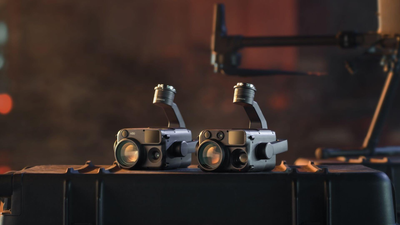
Its 16,000 lumens of on-board lighting and 4K camera let the pilot pick out cracks, corrosion, missing hardware and holes in the walls or roof. The built-in LiDAR (a laser scanner that builds an accurate 3D model) gives each bin a digital record, so the next inspection can be compared against the last.
Safety still comes first. Cargill uses a formal, risk-based standard for flying in dusty environments, and trained pilots decide when not to fly, including where fumigation gases are present.
The numbers behind the return
The results are hard to ignore. Inspections dropped from about four hours to around 30 minutes per bin, with savings of up to $3,500 per bin and around $10,000 a day avoided on scaffolding.
Pilots can now cover 20 to 24 large bins, or 30 to 40 smaller ones, in a single day. One job under the site walkways that would have taken several days with traditional methods was finished in one.
The data has also changed decisions. Cargill found that some decommissioned bins were still sound, while others were in far worse shape than expected.
What this means for UK sites
The same challenges exist in UK grain stores, feed mills and food processing plants, as well as silos and hoppers in quarrying and cement. If your team still relies on confined space entry for these checks, the Elios 3, available from Coptrz, could make inspections faster and keep people out of harm’s way.
FAQs
Can a drone inspect the inside of a grain bin?
Yes. Cargill uses the Flyability Elios 3 to inspect the inside of grain bins without anyone entering the confined space.
How much time does the Elios 3 save on grain bin inspections?
In Cargill’s case, each inspection fell from about four hours to around 30 minutes.
Is it safe to fly a drone in a dusty grain bin?
Dust can be a hazard, so Cargill follows a formal risk-based standard and trained pilots decide when not to fly.
What can the Elios 3 detect inside a silo?
Its lighting, 4K camera and LiDAR help spot cracks, corrosion, missing hardware, holes and grain build-up on walls.
Does the Elios 3 need scaffolding or rope access?
No. The drone flies in through the bin’s access point, so there’s no need for scaffolding or rope access teams.
Final thoughts
Still sending people into silos and bins? Ask the Coptrz team about the Flyability Elios 3.