Skip to content


How An Indigenous Community Built A Dock First Responder Programme
- by Stefan Gandhi
An Indigenous community on Manitoulin Island has built one of the most compelling community-led drone programmes in North America, using DJI docking stations and enterprise drones to protect 9,400 members across 65,000 hectares of land and 220 kilometres of shoreline. What makes it stand out is that the programme was designed by the community itself, for its own needs, turning a Dock as First Responder model into a genuine public safety tool. This article looks at how the programme works, why it was built in-house, and what other public safety teams can learn from it.
A Community-Led Response To Real Needs
The community is a self-governing unceded territory, not governed by federal or provincial government, with its own laws and its own police and administration departments. Faced with challenges around mental health, addiction, and organised crime, its leadership looked at technology that could help protect community members over a vast and remote area.
The idea of a drone system was first brought to the leadership table by a staff member, and it met some early hesitation because nothing like it had been attempted in an Indigenous community setting. As Chief Executive Officer Shelley Trudeau put it, the programme was created by their own people based on their own needs. That local ownership runs through every part of how it operates today.
From A Single Drone To A Network Of Docks
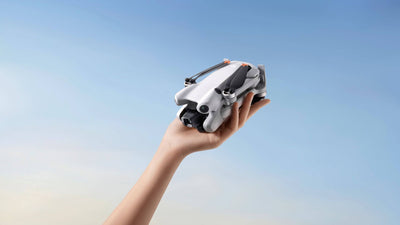
The programme did not start with a large fleet. It grew from a single small DJI drone to enterprise-level aircraft and, eventually, to a network of automated docking stations positioned across the community. Chief Technology Officer Michael McCormick describes the shift as moving from occasional flights to always-ready coverage.
Working with drone specialists InfinitDrones from the very beginning, the team received training, setup support, troubleshooting, and ongoing fleet maintenance. That partnership matters. A community-led programme still needs a reliable technical partner to keep aircraft airworthy and operators confident, which is exactly the model Coptrz supports for public safety teams in the UK.
How The Dock As First Responder Model Works
The heart of the programme is speed. A traditional drone response means dispatching a team that might take around 45 minutes to reach a remote location. With docking stations already positioned across the territory, a drone can be overhead within 30 seconds of a trigger.
The team realised early on that fixed cameras were only recording passively, so they added drones to actively respond. An automated dispatch system now reacts to a trigger sent by the camera network and deploys a dock drone straight to the location, giving operators eyes beyond the visual line of sight of any single camera. A surveillance operator is in the control room 24 hours a day, and pilots run several patrol flights each day on top of any emergency callouts.
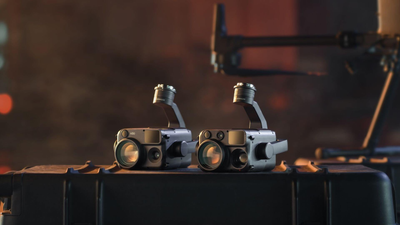
The drones carry practical public safety payloads. Thermal imaging, a spotlight, and a loudspeaker attachment all extend what a single aircraft can do, from locating a missing person at night to communicating with someone on the ground.
Built For A Harsh Northern Environment
Location shapes everything here. Manitoulin Island sits at the end of the road, with one way in and one way out, and the far-north climate brings flash freezes, freezing rain, heavy snow, high winds, and temperatures that can drop below minus 28 degrees Celsius. The team continues to fly in many of these conditions, and because the docks are already positioned throughout the community, a response asset is effectively always on the scene.
A Life Saved And A Community Reassured
The clearest measure of the programme's value came when an elder went missing. The team deployed a dock drone with thermal vision and located the individual, who was already showing signs of hypothermia by the time emergency services reached them. Without the drone, the outcome could have been far worse.
The programme also supports the community's annual cultural festival, one of the largest powwows in North America, by surveying the grounds while thousands gather. Community members report feeling safer knowing someone is keeping watch, and other police services and Indigenous communities are now visiting to learn how the model was built. For McCormick, it is Indigenous innovation at work.
What UK Public Safety Teams Can Take From It
This programme is a template for any organisation weighing up a drone response capability. Position automated docks where response time matters most, pair them with thermal and communication payloads, integrate them with existing camera and alert systems, and back the whole thing with proper training and maintenance. The result is faster response, wider coverage, and a safety net that works around the clock.
FAQs
What is a Dock as First Responder program?
A Dock as First Responder programme uses automated drone docking stations positioned across an area so a drone can launch and reach an incident within seconds, often before ground units arrive. The drone streams live video, thermal imagery, and other data to a control room, giving responders situational awareness on the way to the scene.
How does a drone first responder program work?
An alert, such as a camera trigger or an emergency call, dispatches a drone from a nearby dock automatically or at an operator's command. The aircraft flies to the location, provides a live overhead view, and returns to its dock to recharge, ready for the next call. A control room operator monitors the feed throughout.
What is the DJI Dock 3?
The DJI Dock 3 is an automated drone-in-a-box station that houses and charges a Matrice 4D or Matrice 4TD drone for round-the-clock remote operations. It enables scheduled patrols and rapid response flights without a pilot on site, which makes it well suited to public safety and infrastructure monitoring.
Can drones be used for search and rescue?
Yes. Drones with thermal cameras are widely used in search and rescue because they can detect body heat against cold terrain and cover large or difficult areas quickly. In the case covered here, a thermal dock drone located a missing elder showing signs of hypothermia before ground responders reached them.
Final Thoughts
This programme shows what happens when a community takes ownership of its own safety technology. By combining DJI docks, enterprise drones, thermal payloads, and a 24 hour control room, the team turned a remote and challenging territory into one of the best-protected communities of its size, and did it on its own terms. It is a powerful example of the Dock as First Responder model delivering results that matter.
Explore the DJI Matrice 4TD thermal drone at the Coptrz official online store, and to design a dock-based first responder programme for your own team, speak to our enterprise specialists at sales@coptrz.com or on 0330 111 7177.