Skip to content


How DJI Dock 3 Helps Rangers Protect Wildlife Day And Night
- by Stefan Gandhi
Conservation teams managing large, remote reserves face a challenge that no amount of ground patrols can fully solve: distance. When a security alert fires at 2am across rugged terrain several kilometres from the nearest ranger post, every minute that passes is a minute a poacher has the upper hand. Traditional helicopter surveillance has always offered an aerial advantage, but the operational costs, logistical complexity, and crew requirements make it impossible to sustain around the clock.
At Babanango Game Reserve in South Africa, that exact problem drove a search for something better. The result was a fully automated drone programme built around DJI Dock 3 and a Drone as First Responder (DFR) model that is now redefining what modern wildlife protection looks like.
The Challenge Facing Babanango Game Reserve
Established in 2017 with a mission to protect endangered wildlife including both black and white rhino, Babanango spans mountainous, rugged terrain. Monitoring more than 80 kilometres of fencing across this landscape presented a serious operational burden. Steep altitude changes, limited road access, and extreme weather conditions meant that ground vehicles were frequently too slow to respond, and helicopter deployments were prohibitively expensive to run on a regular basis.
The reserve needed a solution that could operate continuously, reach any point on the property rapidly, and do so at a cost that was sustainable over the long term.
Why The Team Chose DJI Dock 3
After evaluating several drone systems and running tests across the property, the team at Babanango settled on DJI's dock-based infrastructure as the most viable long-term platform. By the time implementation began, DJI Dock 3 had launched, bringing with it a step change in AI analytics capability and camera performance compared to earlier generations.
Working alongside technology partners OPTRON and Security4U, the reserve designed a network of five docking stations positioned strategically around the property, mostly co-located with existing communication towers. One additional tower was constructed to fill a coverage gap. The result was 95% coverage of the full fence line and reserve interior.
Full regulatory compliance was a non-negotiable part of the deployment. OPTRON worked directly with the South African Civil Aviation Authority to ensure all operations were legally approved, transparent, and safe before a single automated flight took place.
How The DFR System Works In Practice
The DJI Dock 3 units are integrated with ground-based sensors and the reserve's wider security infrastructure. When a sensor triggers an alert, a drone launches immediately from the nearest dock, reaching the location significantly faster than a vehicle patrol ever could. The aircraft arrives on scene while rangers are still en route, delivering live aerial footage directly to the operations team.
This aerial visibility transforms how rangers plan their response. Pilots work alongside rangers in real time, with drone feeds informing ground teams about the nature of the threat, the number of individuals involved, and the best approach route. Local knowledge from experienced rangers combines with drone intelligence to produce faster, smarter decisions on the ground.
Even the most inaccessible corners of the reserve, previously hours away by foot or vehicle, can now be assessed within minutes. For a reserve where the presence of black and white rhino makes speed of response a life-or-death matter, that capability shift is significant.
Beyond Security: Ecological Monitoring & Land Management
The benefits of the DJI Dock 3 deployment have reached well beyond anti-poaching operations. The same infrastructure that dispatches drones as first responders also supports a growing programme of ecological monitoring across the reserve.
Rangers now use drone flights to track vegetation changes over time, assess elephant impact on habitats, monitor the spread of alien plant species, and understand how land management interventions are performing. Animal movement across the reserve, which previously required hours of searching on foot or by vehicle, can now be mapped in minutes using aerial observation.
Thermal imaging capability within the DJI Dock 3 system means these operations are not limited to daylight hours. Nocturnal wildlife behaviour, night-time security patrols, and low-visibility weather conditions are all scenarios the system handles effectively. That 24/7 operational window is one of the platform's most important practical advantages for a conservation team.
Operational & Commercial Benefits
The financial case for automated drone infrastructure in conservation is increasingly compelling. Helicopter deployments are expensive to staff, schedule, and maintain. Ground vehicle patrols are labour intensive and physically limited by terrain. An automated dock-based system removes many of those constraints.
At Babanango, the DJI Dock 3 network has reduced response times, lowered operational costs, and given rangers capabilities that simply did not exist before. The scalability of the system, with each dock independently capable of autonomous deployment, means coverage can be extended as the reserve grows or as operational requirements change.
For wildlife conservation organisations and reserve managers across the UK and internationally, this case study demonstrates that drone infrastructure is no longer an experimental tool. It is a mature, deployable technology with a proven track record in one of the world's most demanding operating environments.
What This Means For Enterprise Drone Operators In The UK
The principles behind the Babanango deployment are directly applicable to a range of UK use cases. Critical national infrastructure protection, large estate management, perimeter security for industrial sites, and environmental monitoring programmes all share the same fundamental challenge: coverage across large areas with a need for rapid, reliable response.
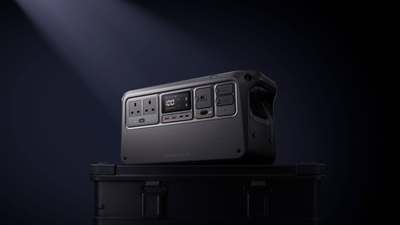
DJI Dock 3 is purpose-built for exactly this kind of deployment. Its automated launch and landing capability, integrated thermal and zoom cameras, advanced AI analytics, and weatherproof design make it one of the most capable remote drone-in-a-box solutions currently available to enterprise operators.
FAQs
What is Drone as First Responder (DFR) and how does it work?
Drone as First Responder is an operational model where an unmanned aerial vehicle is automatically dispatched the moment a security alert or sensor trigger is detected. Rather than waiting for a human operator to physically attend a location, the drone launches from a permanent docking station and reaches the scene within minutes. This provides immediate aerial visibility to support ground teams who are still travelling to the incident.
Can DJI Dock 3 operate at night?
Yes. DJI Dock 3 is equipped with thermal imaging capability, enabling it to conduct effective surveillance in complete darkness. The system supports both day and night operations as part of a 24/7 automated monitoring programme.
How many DJI Dock 3 units are needed to cover a large area?
This depends on the terrain, terrain type, and the level of coverage required. At Babanango Game Reserve, five docking stations were sufficient to achieve 95% coverage across the reserve and its 80-kilometre fence line. A professional deployment assessment will typically determine the optimal number and placement of units.
Is DJI Dock 3 suitable for use in the UK?
DJI Dock 3 is available to enterprise operators in the UK and is compatible with UK CAA regulatory frameworks for Beyond Visual Line of Sight (BVLOS) operations, subject to appropriate approvals. UK operators deploying dock-based systems will need to work through the correct authorisation process, which authorised resellers and training providers can assist with.
What industries in the UK can benefit from automated drone docking systems?
Automated dock systems like DJI Dock 3 are being adopted across a broad range of sectors including utilities and critical national infrastructure, oil and gas, construction and land surveying, emergency services support, environmental monitoring, and large estate or private land security.
Conclusion
The Babanango Game Reserve case study is a compelling demonstration of what enterprise drone technology can achieve when it is deployed thoughtfully and at scale. DJI Dock 3 has transformed conservation operations at the reserve, cutting response times, expanding coverage, reducing costs, and unlocking ecological monitoring capabilities that were simply not possible before. For any organisation managing large areas of land, critical infrastructure, or high-value assets, the lessons from this deployment are directly relevant.
If you are looking to explore DJI Dock 3 or other enterprise drone solutions for your organisation, browse the full range at the Coptrz official online store.