Skip to content


DJI Power 1000 Mini Vs Power 1000 V2 Vs Power 2000
- by Stefan Gandhi
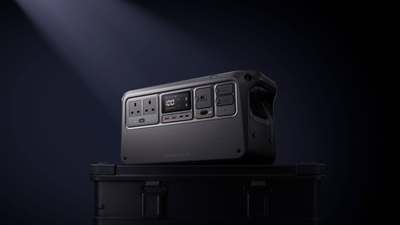
DJI now sells three lithium ferrophosphate power stations side by side: the new DJI Power 1000 Mini, the established DJI Power 1000 V2 and the heavyweight DJI Power 2000. They share the same LFP chemistry, the same 4000-cycle rating and the same 5000 metre operating altitude, but they target very different jobs. This guide compares the three units head to head, explains where each one earns its keep, and suggests the right pick for drone pilots, off-grid creators, road-trippers and home backup buyers.
The Three DJI Power Stations at a Glance
Capacity: Power 1000 Mini (1008 Wh), Power 1000 V2 (1024 Wh), Power 2000 (2048 Wh).
Continuous output: Power 1000 Mini (1000W max, 800W rated), Power 1000 V2 (2600W), Power 2000 (3000W).
Net weight: Power 1000 Mini (11.5kg), Power 1000 V2 (14.2kg), Power 2000 (22kg).
Dimensions (L x W x H): Power 1000 Mini (314 x 212 x 216 mm), Power 1000 V2 (448 x 225 x 230 mm), Power 2000 (448 x 225 x 324 mm).
USB-C max output: Power 1000 Mini (100W), Power 1000 V2 (140W), Power 2000 (140W).
Cell chemistry and cycle life: All three use LFP cells rated to 4000 cycles.
Recharging temperature: Power 1000 Mini (-10 to 45 °C), Power 1000 V2 (0 to 45 °C), Power 2000 (0 to 45 °C).
UK price (Heliguy): Power 1000 Mini (£449), Power 1000 V2 (£579), Power 2000 (£959).
The DJI Power 1000 Mini is the smallest of the three by some distance. At 12 litres of physical volume, it is roughly half the size of the Power 1000 V2 and around one-third the size of the Power 2000. Weight follows the same pattern, with the Mini trimming 2.7kg off the V2 and 10.5kg off the Power 2000.
Capacity and Continuous Output
The Mini and the V2 are essentially level on stored energy at around 1kWh. The Power 2000 doubles that to 2048 Wh, which is the headline reason to consider it for film sets, long off-grid jobs or whole-day home backup.
Continuous output is where the Power 1000 V2 and the Power 2000 stretch ahead of the Mini. The Mini delivers up to 1000W, with a rated continuous output of 800W. That is enough for laptops, monitors, lighting kits, induction kettles and most portable fridges. The V2 jumps to 2600W and the 2000 reaches 3000W, which opens the door to power tools, high-wattage kettles, microwaves and small workshop machines.
For drone pilots who run laptops, charging hubs, monitors and small fridges in the field, the Mini's output envelope is well matched to the load. For builders, broadcast crews and anyone running heavy AC tools, the V2 or the 2000 is the safer pick.
Charging Methods and Real-World Convenience
All three units recharge from the grid, from a car power outlet and from solar. The DJI Power 1000 Mini adds two charging methods the others do not have: direct car-battery charging through the DJI Power Car Battery Charging Cable, and integrated USB-C charging through a built-in retractable 100W cable.
The retractable USB-C cable is a small detail that changes the experience of using the Mini on the road. There is no separate cable to forget, and the cable retracts back into the body when you let go. It will fast charge a recent MacBook Pro, a tablet or a phone at full PD speed.
The Mini's recharging temperature window also stretches down to -10 °C, against a 0 °C floor on the V2 and the 2000. UK pilots heading to colder estates, alpine sites or winter shoots will get more reliable recharges out of the Mini.
Drone Charging and Field Use
All three power stations support drone charging through the DJI Power Fast Charge Cable for Drones, with the Mini, the V2 and the 2000 each able to push DJI fast charging through their SDC ports. DJI's published figure for an Air 3 Series battery is 10% to 95% in around 30 minutes through a fast-charge cable on the Mini, fast enough to rotate three batteries through a single station and keep an aircraft in the air for most of a working day.
A typical drone battery takes around eight full charges from a single 1008 Wh top-up on the Mini or the V2. That doubles to roughly sixteen charges on the Power 2000, which makes it the natural choice for surveying teams, broadcast crews and any operation that runs three or four drones from a single mobile power hub.
Expansion and Long-Term Backup
If you expect your power needs to grow, the DJI Power 1000 V2 is the only model in the line-up that supports the DJI Power Expansion Battery 2000. The expansion battery adds 2048 Wh per unit, and the V2 can stack up to five for a maximum 11,264 Wh package. Neither the Mini nor the Power 2000 supports the expansion battery according to current DJI documentation.
For permanent home backup, the V2's expansion path turns it into a credible whole-room UPS, while the Power 2000 stands alone as a higher-capacity portable that does not stack.
Which DJI Power Station Should You Pick
Buy the DJI Power 1000 Mini if you want the smallest, lightest, easiest 1kWh station for travel, drone field charging and content-creation kit. The retractable USB-C cable, the car-battery charging path and the £449 price make it the most convenient pick for individual pilots and content creators.
Buy the DJI Power 1000 V2 if you want similar capacity to the Mini but a much higher output ceiling for power tools and AC appliances, plus the option to stack expansion batteries up to 11,264 Wh.
Buy the DJI Power 2000 if you need the largest single-unit capacity, the highest output, and the headroom for film and TV production, long-distance RV trips or whole-day backup of multiple drone batteries.
FAQs
What is the difference between the DJI Power 1000 Mini and the DJI Power 1000 V2?
The DJI Power 1000 Mini is around half the size and 2.7kg lighter than the V2, and adds direct car-battery charging plus a built-in retractable 100W USB-C cable. The V2 trades that compactness for a much higher 2600W continuous output, a 140W USB-C port and the option to stack the DJI Power Expansion Battery 2000.
Can the DJI Power 2000 be expanded with extra batteries?
According to DJI's current documentation, the DJI Power Expansion Battery 2000 is supported by the DJI Power 1000 V2 only. Neither the DJI Power 1000 Mini nor the DJI Power 2000 supports the expansion battery, so the V2 is the choice when you want a stackable LFP system that can scale to 11,264 Wh.
How many drone batteries can the DJI Power 2000 charge?
With 2048 Wh of usable capacity, the DJI Power 2000 will charge a typical drone battery around sixteen times from full, depending on the aircraft model and the cable used. That is double the Mini and the V2, which each handle around eight full drone-battery charges per top-up.
Can you use the DJI Power 1000 Mini in cold weather?
Yes. The DJI Power 1000 Mini is rated to recharge between -10 and 45 degrees Celsius, ten degrees colder than the recharge floor on the Power 1000 V2 and the Power 2000. That makes the Mini the better LFP power station for cold UK shoots, mountain work and winter inspections.
Is the DJI Power 1000 Mini good for charging DJI drones?
Yes. The Mini's SDC port supports the DJI Power Fast Charge Cable for Drones, which DJI quotes as taking a DJI Air 3 Series battery from 10% to 95% in around 30 minutes. One Mini holds enough capacity for around eight full drone-battery charges, which keeps a single aircraft flying for most of a shooting day.
Conclusion
DJI's three-tier power station line-up makes the choice clearer than it first looks. The DJI Power 1000 Mini takes the portability and field-charging brief, the DJI Power 1000 V2 covers the higher-output and expandability brief, and the DJI Power 2000 is the heavy lifter for film sets, long road trips and multi-drone operations.
For tailored advice on the DJI Power 1000 Mini, the Power 1000 V2 or the Power 2000, speak to our team at sales@coptrz.com or 0330 111 7177.