Skip to content


Which DJI Drones Have Obstacle Avoidance?
- by Stefan Gandhi
In an era when aerial photography and drone inspections are becoming mainstream in the UK, one feature has shifted from nice to have to essential: obstacle avoidance. For hobbyists flying over scenic Lake District valleys, professionals inspecting telecom masts or infrastructure, and enterprise teams tasked with public safety drone footage, the ability of a drone to sense its surroundings and act accordingly is no longer a bonus. It is a safeguard.
In this article, we walk through eight current models from DJI, explaining where obstacle avoidance is built in and where it is intentionally limited. We highlight how each model fits different users across the consumer and professional drone space in the UK.
DJI Mavic 4 Pro
The Mavic 4 Pro is DJI's flagship consumer drone designed to deliver cinematic image quality while offering robust safety features. With omnidirectional obstacle avoidance supported by LiDAR and vision sensors, it is built to handle complex environments with confidence.
For UK creators flying in wooded areas, near buildings or across uneven terrain, this level of sensing provides meaningful protection.
- Ideal for high-end hobbyists and semi-professional cinematographers
- Obstacle avoidance reduces collision risk and allows greater creative focus
- Sits firmly in the prosumer to professional crossover category
If your budget allows and you want creative freedom backed by strong safety systems, the Mavic 4 Pro delivers.
DJI Mini 5 Pro
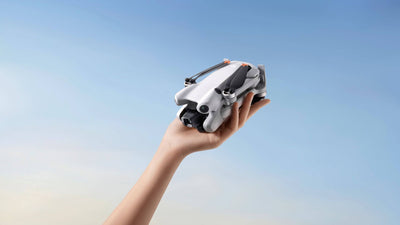
Weighing in at around 249g, the Mini 5 Pro punches well above its size. It features omnidirectional obstacle sensing using vision sensors, supported by forward-facing LiDAR to improve detection accuracy, including in lower light conditions.
This makes it particularly appealing for UK pilots flying near trees, buildings or varied landscapes, while still benefiting from sub-250g classification.
- Ideal for travel enthusiasts and hobbyists seeking portability without compromise
- Obstacle avoidance adds confidence when flying in tighter environments
- Sub-250g weight helps with CAA registration thresholds
If you want near-professional imaging and genuine safety systems in a compact frame, the Mini 5 Pro is a compelling option.
DJI Air 3S
The Air 3S bridges the gap between mainstream consumer drones and more serious prosumer models. It offers dual cameras and a comprehensive obstacle avoidance system marketed by DJI as Nightscape Omnidirectional Obstacle Sensing.
This makes it particularly suitable for flights in complex or changing light conditions, which are common in UK environments.
- Suitable for creators wanting advanced features without enterprise pricing
- Obstacle avoidance enhances safety near structures or in lower light
- Foldable design keeps it practical for travel and field work
If you want creative flexibility paired with dependable safety tools, the Air 3S hits a strong middle ground.
DJI Neo 2
The DJI Neo 2 takes a very different approach to flight safety. Designed for agile, immersive FPV-style flying, it prioritises responsiveness and manual control rather than automated obstacle detection.
The Neo 2 does not include forward, rear or omnidirectional obstacle avoidance. Instead, it relies on downward vision sensors for positioning and landing stability, with collision avoidance left entirely to the pilot. This design choice keeps the aircraft lightweight and highly manoeuvrable.
- Best suited to FPV enthusiasts and indoor or open-space flying
- Downward vision assists with stability but does not prevent collisions
- Not recommended for autonomous flight near trees, buildings or obstacles
If you are looking for automated safety systems, the Neo 2 is not the right tool. However, for pilots seeking direct control and immersive flight, it offers a deliberate and focused experience.
DJI Matrice 350 RTK
For professional surveying, inspections and enterprise workflows, the Matrice 350 RTK is a serious platform. It offers high-precision flight, multi-payload support and advanced safety systems, including six-direction positioning and detection sensors.
Obstacle avoidance is essential when operating near infrastructure, terrain or hazardous environments.
- Ideal for industrial inspections, mapping and infrastructure work
- Safety systems support operations near structures and restricted spaces
- RTK accuracy and payload flexibility complement robust avoidance
If your organisation prioritises reliability, precision and operational safety, the M350 RTK is a strong choice.
DJI Matrice 400
The Matrice 400 represents DJI’s most advanced obstacle avoidance capability to date. It combines rotating LiDAR, mmWave radar and low-light vision systems to detect obstacles that traditional sensors may miss.
This level of sensing is particularly valuable in complex industrial environments across the UK.
- Designed for power-line inspection, utilities and wind-turbine operations
- Capable of detecting thin obstacles such as cables and wires
- Specialist platform with market-leading safety systems
For high-risk environments where collision is not an option, the Matrice 400 delivers enterprise-grade protection.
DJI Matrice 4 Enterprise
The Matrice 4 Enterprise series delivers powerful sensing and avoidance in a more compact enterprise platform. It is designed for intelligent operations where safety, efficiency and data quality must work together.
- Ideal for surveying, emergency response and urban inspections
- Advanced detection supports safer flight in confined environments
- Easier deployment compared with heavy-lift enterprise drones
If you need enterprise capability with a smaller operational footprint, the Matrice 4 Enterprise is a versatile solution.
DJI Matrice 4 Thermal
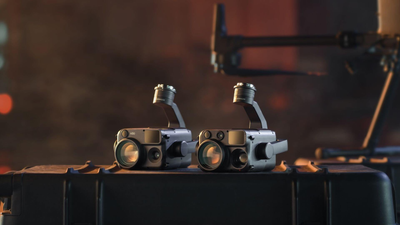
For thermal imaging operations, including inspections and emergency services, the Matrice 4 Thermal pairs specialist sensors with advanced obstacle avoidance. The 4-series places strong emphasis on low-light detection and laser-based ranging.
- Well suited to thermal inspection and public safety operations
- Obstacle avoidance supports flight near structures and in reduced visibility
- Combines mission-specific sensors with a robust safety platform
If thermal data collection is central to your work, this model is built to operate safely in demanding conditions.
What Obstacle Avoidance Actually Means
Obstacle avoidance is not a single feature but a collection of technologies:
- Vision sensors detect obstacles in multiple directions
- LiDAR and laser systems improve distance accuracy, even in low light
- mmWave radar enhances detection in industrial and complex environments
In practice, these systems allow a drone to slow, stop, reroute or hover to avoid collisions. For UK operators flying near trees, power lines or buildings, this can significantly reduce operational risk.
Choosing Based on Your Use Case
| Use Case | Recommended Model | Why |
|---|---|---|
| Travel or holiday creative, portability essential | Mini 5 Pro | Compact, under 250g, strong obstacle systems |
| Enthusiast content creation with safety features | Air 3S | Foldable, feature-rich, reliable avoidance |
| High-end cinematic work | Mavic 4 Pro | Full omnidirectional sensors, pro imaging |
| FPV-style flying or manual control training | Neo 2 | Agile, lightweight, manual-first design |
| Professional inspections or mapping | Matrice 350 RTK | Enterprise-grade safety and payload support |
| High-risk infrastructure missions | Matrice 400 | LiDAR and radar avoidance for complex zones |
| Compact enterprise surveying or urban inspections | Matrice 4 Enterprise | Advanced detection in a smaller platform |
| Thermal inspection or emergency services | Matrice 4 Thermal | Thermal imaging with enhanced avoidance |
Regulatory Reminder for UK Users
Obstacle avoidance improves safety but does not replace responsible piloting. UK drone operators must still comply with Civil Aviation Authority requirements, including registration, pilot competency and airspace rules.
You must maintain visual line of sight unless specifically authorised, operate at safe heights, respect restricted zones and protect privacy. Obstacle avoidance should be treated as a safety backup, not a substitute for awareness and planning.
Frequently Asked Questions
What does omnidirectional obstacle avoidance mean in DJI drones?
It means the drone can detect obstacles from multiple directions, including front, rear, sides, above and below, allowing it to take avoidance action.
Does obstacle avoidance guarantee no collisions?
No. Performance can be affected by lighting, thin obstacles, reflective surfaces or rapid pilot input. Pilot awareness remains essential.
Are drones under 250g exempt from UK rules?
No. While lighter drones may have fewer registration requirements, all pilots must follow CAA regulations.
Can obstacle avoidance work at night?
Some models use LiDAR or low-light sensors to improve performance in darkness, but caution is still required.
Does the DJI Neo 2 have obstacle avoidance?
No. The Neo 2 does not include collision avoidance sensors. It uses downward vision for positioning only and requires full manual control.
Can I disable obstacle avoidance?
Yes, most DJI drones allow this, but disabling it removes an important safety layer and is not recommended for inexperienced pilots.
Conclusion
Obstacle avoidance has evolved from a supporting feature into essential safety technology for drone users across creative, commercial and enterprise applications. Choosing the right platform can significantly improve confidence, safety and mission reliability.
From compact models like the Mini 5 Pro and Air 3S, through advanced creative tools such as the Mavic 4 Pro, to enterprise solutions including the Matrice 350 RTK, Matrice 400 and Matrice 4 series, DJI offers a clear progression of safety capability. For pilots seeking manual control and immersive flying, the Neo 2 provides an alternative approach that prioritises skill over automation.
In the UK, where terrain, infrastructure and regulation add complexity, selecting the right obstacle avoidance system can be a genuine operational advantage.
Ready to explore? Head to the Coptrz official online store now to browse the full DJI drone range and find the right model for your UK-based mission or creative project.