Skip to content


How To Create A Bridge Digital Twin Using DJI Zenmuse L3 LiDAR
- by Stefan Gandhi
Major infrastructure such as bridges requires consistent monitoring, accurate measurements and reliable inspection data. Traditional inspection methods often rely on manual surveys, rope access teams or partial measurements that only capture limited sections of a structure. Drone LiDAR technology has changed this approach by enabling engineers to create detailed digital twins of entire assets quickly and safely.
In a recent DJI Enterprise case study, engineers demonstrated how the DJI Matrice 400 and DJI Zenmuse L3 LiDAR payload were used to create a high precision digital twin of the La Constitución bridge in Cadiz, Spain. The bridge is one of the tallest in Europe and spans approximately five kilometres, making it a complex structure to inspect using conventional techniques.
This article summarises the complete workflow shown in the video, explaining how drone based LiDAR scanning can capture high density spatial data and transform it into a detailed digital twin for long term infrastructure monitoring.
Why Digital Twins Are Transforming Infrastructure Inspection
Bridges experience constant stress from traffic loads, wind, temperature variation and environmental conditions. Over time these forces can lead to gradual deformation, structural fatigue or small defects that may become serious if left undetected.
A digital twin creates a precise virtual replica of a structure that engineers can analyse and monitor over time. This model provides an accurate reference that can be revisited during future inspections.
For bridge operators and engineering teams, digital twins offer several major advantages:
- Accurate baseline data for long term asset monitoring
- Detailed visualisation of structural components
- Early identification of deformation or structural changes
- Improved inspection planning and maintenance strategies
- Reduced need for hazardous manual inspection methods
Using drone based LiDAR systems, these models can be captured faster and with significantly higher detail than traditional survey methods.
The Role Of DJI Zenmuse L3 In LiDAR Mapping
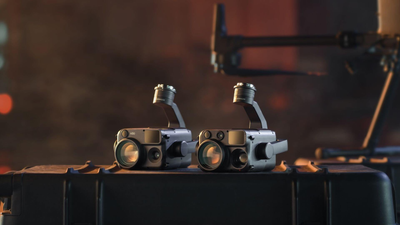
The DJI Zenmuse L3 is a high performance LiDAR payload designed for enterprise drone operations. When mounted on the DJI Matrice 400 platform, it enables rapid capture of dense point cloud data while maintaining stable flight performance and long mission endurance.
In this bridge scanning project, the Zenmuse L3 captured LiDAR data alongside RGB imagery to produce a comprehensive dataset for digital twin reconstruction.
Key capabilities of the system include:
- High density LiDAR scanning for detailed structural capture
- Integrated RGB camera for visual context
- Support for complex infrastructure mapping
- High precision positioning using RTK corrections
- Compatibility with DJI Terra for advanced processing
Together, these features allow engineers to convert real world infrastructure into accurate digital models suitable for analysis, simulation and long term monitoring.
Preparing For A LiDAR Bridge Survey
Before launching the drone, engineers prepared a precise positioning system to ensure accurate data collection.
The team installed a DJI D RTK 3 multifunction station on a tripod and configured it as a local base station. Using a dedicated base station reduces reliance on external correction networks and helps maintain a short baseline distance, improving positioning accuracy.
Once powered on, the base station transmitted correction data to the drone during the flight.
The next step involved collecting ground control points across the survey area. Engineers used a second D RTK 3 unit in rover mode to record these points. Ground control points serve as reference markers that allow the LiDAR data to be aligned accurately with the real world coordinate system.
During this stage, two types of reference points were captured:
- Control points used to align the model
- Checkpoints used to verify accuracy after processing
Accurate control data forms the foundation of a reliable digital twin, so careful setup at this stage is essential.
Planning The LiDAR Flight Mission
Once the positioning system was ready, engineers created a flight plan using DJI Pilot 2.
For this bridge project, the team designed an area route configured specifically for long linear infrastructure. Several parameters were adjusted to optimise data capture.
The LiDAR sampling rate was set to 100 kHz. Although the Zenmuse L3 supports much higher rates, this configuration provided the ideal balance between point density and flight range.
Non repetitive scanning was selected so the sensor could capture the bridge from multiple angles, improving surface coverage and reducing gaps in the dataset.
The flight overlap was configured to around 70 percent to ensure consistent coverage between passes. A course angle of approximately 170 degrees produced a U shaped flight pattern that suited the long geometry of the bridge.
After the mission plan was finalised, it was saved within the project and synchronised with the DJI account so it could be reused or modified later.
Executing The Drone Mapping Mission
With the flight route prepared, the team performed final pre flight checks to confirm system status, RTK connection and sensor readiness.
Once airborne, the Matrice 400 automatically followed the programmed route while the Zenmuse L3 collected LiDAR data and RGB imagery simultaneously.
During the mission, operators monitored both the LiDAR and camera feeds in real time to confirm that the structure was being captured correctly.
The Matrice 400 platform also includes multiple FPV cameras that provide situational awareness during flight. This allows pilots to maintain visibility in all directions even while the LiDAR sensor focuses downward toward the structure.
If unexpected obstacles or conditions arise, operators can pause the automated route and take manual control immediately.
Some areas of complex infrastructure may require additional flight routes. For example, sections underneath the bridge can sometimes require supplementary flights to ensure full coverage.
Processing LiDAR Data In DJI Terra
After completing the flight missions, the captured datasets were transferred into DJI Terra for processing.
A new LiDAR project was created and the collected flight data was imported into the software. The coordinate system was then adjusted to match the local reference system used by the engineering team.
Next, the previously collected ground control data was added to the project.
Three points were used as control references to align the model, while nine checkpoints were reserved for validation of the final dataset accuracy.
Several processing options were enabled during reconstruction:
- Optimisation
- Accuracy enhancement
- Surface smoothing
- High point cloud density
The system then generated several reconstruction outputs including orthophotos, 2D maps, 3D mesh models and Gaussian splatting visualisations.
Processing the full dataset took approximately five hours.
The Resulting Digital Twin
After processing was complete, the resulting digital twin revealed extremely detailed representations of the bridge structure.
The LiDAR point cloud captured structural elements such as cables, tension systems and deck geometry with impressive clarity.
Alongside the point cloud, DJI Terra generated additional visual models including a 3D mesh and Gaussian splatting reconstruction. These models provide both technical measurement accuracy and visually realistic representations of the infrastructure.
The quality report confirmed strong accuracy results.
The root mean square error was approximately two centimetres, while ground control point errors remained below seven millimetres.
Outputs from the project can be exported for use in other engineering software platforms such as DJI Modify or external analysis tools.
This allows engineers to compare future datasets against the original digital twin to track structural movement or identify emerging defects.
Real World Benefits For Bridge Operators
The workflow demonstrated in this case study highlights how drone LiDAR technology can support modern infrastructure management.
For bridge owners, transport authorities and engineering consultants, digital twins created using drone mapping systems deliver several benefits:
- Faster infrastructure inspections
- Reduced need for lane closures and rope access teams
- High resolution structural analysis
- Repeatable monitoring workflows
- Improved decision making for maintenance planning
As infrastructure ages across Europe and the UK, these capabilities will become increasingly valuable for maintaining safety and extending asset lifespans.
FAQs
What is a digital twin in drone surveying?
A digital twin is a highly accurate digital replica of a real world structure created using data collected from drones, sensors and survey equipment. Engineers use digital twins to analyse infrastructure, monitor changes and compare new inspections against historical data.
How accurate are drone LiDAR scans?
High quality drone LiDAR systems can achieve centimetre level accuracy when combined with RTK positioning and ground control points. In the bridge scanning workflow described above, the final model achieved approximately two centimetres accuracy.
What drones can carry the DJI Zenmuse L3?
The DJI Zenmuse L3 is designed for enterprise drone platforms such as the DJI Matrice 400. These aircraft provide the flight stability, payload capacity and endurance required for professional LiDAR mapping missions.
What software is used to create digital twins from LiDAR data?
DJI Terra is commonly used to process LiDAR datasets captured by DJI Enterprise drones. The software can generate point clouds, 3D meshes, orthophotos and other outputs that can be exported into engineering and modelling software.
Can drone LiDAR be used for other infrastructure inspections?
Yes. LiDAR drones are widely used for inspecting power lines, railways, construction sites, mining operations and large scale engineering projects where accurate 3D data is required.
Conclusion
Drone based LiDAR workflows are rapidly changing how engineers inspect and manage critical infrastructure. By combining the DJI Matrice 400, Zenmuse L3 LiDAR payload, D RTK positioning systems and DJI Terra processing software, teams can create highly detailed digital twins that support long term monitoring and data driven decision making.
As demonstrated in this bridge inspection project, the ability to capture dense LiDAR data and convert it into precise digital models provides engineers with a powerful new tool for maintaining safety and infrastructure resilience.
If you are looking to deploy LiDAR mapping technology in your own operations, explore the DJI Zenmuse L3 and other enterprise drone solutions available from the Coptrz official online store.